
 EN
EN



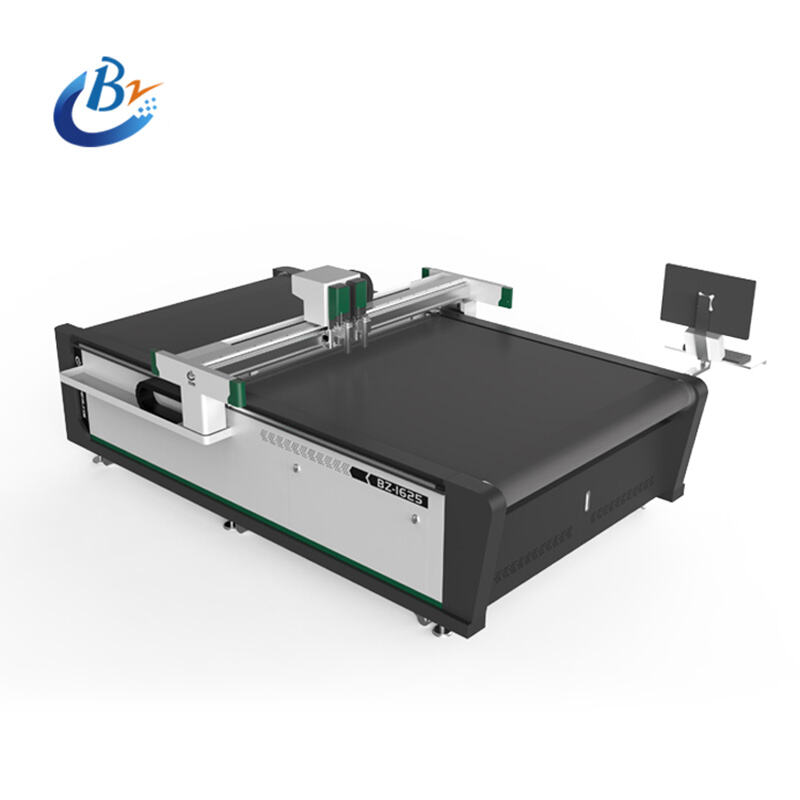
In today's competitive textile and apparel manufacturing environment, labor costs represent one of the most significant and least controllable expenses on the production floor. As wage pressures mount and skilled operators become harder to retain, factory managers are increasingly asking a very practical question: can an automated fabric cutting machine with automatic nesting genuinely reduce labor costs, or is it simply a capital investment that shifts costs rather than eliminates them? The answer, grounded in real production data and operational logic, is a clear yes — but the extent of those savings depends on how the technology is deployed and what processes it replaces.
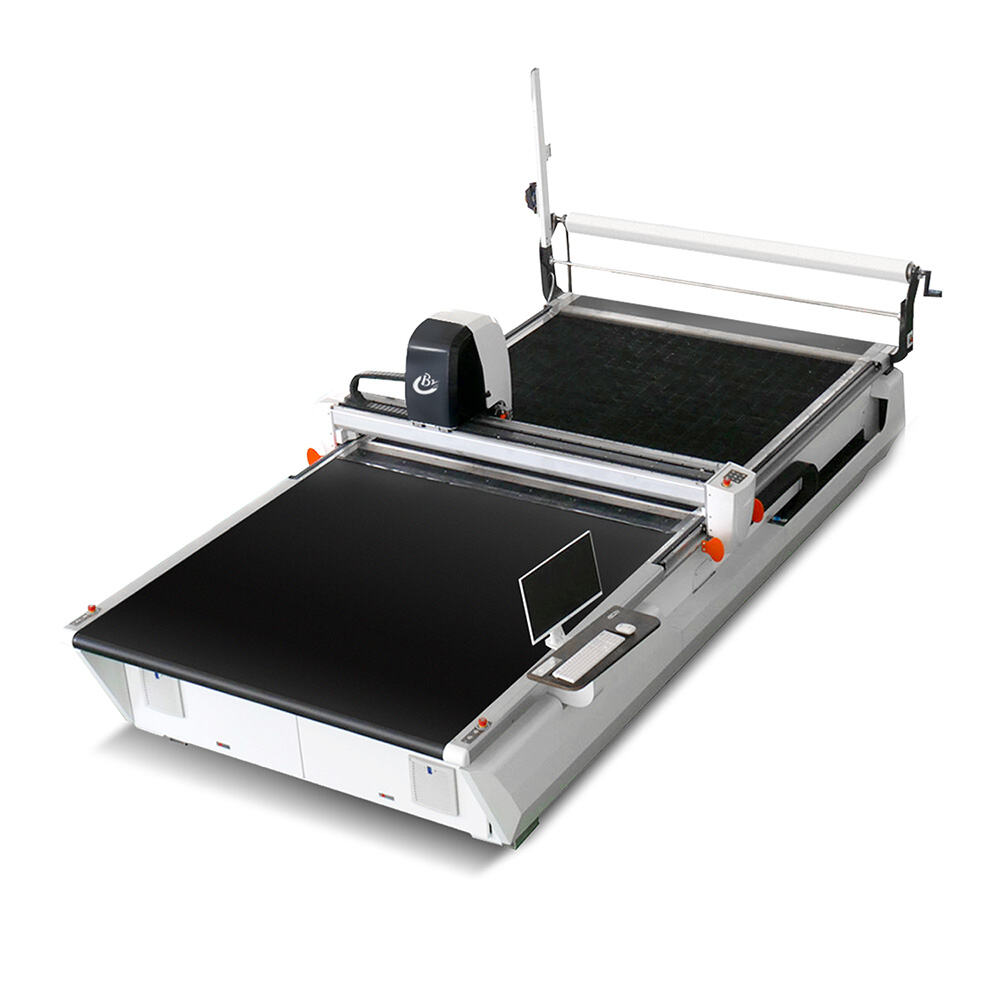
An automated fabric cutting machine equipped with automatic nesting software does far more than simply cut faster. It fundamentally restructures the labor requirements of the cutting room by automating decisions and physical tasks that previously required multiple trained workers. Understanding exactly where and how these labor reductions occur is essential for any manufacturer evaluating whether this technology makes financial sense for their operation. This article examines the mechanisms behind the cost savings, the conditions under which they are most pronounced, and the practical implications for production planning and workforce management.
How Labor Costs Are Structured in Traditional Fabric Cutting
The Hidden Workforce Behind Manual Cutting Operations
Before evaluating what an automated fabric cutting machine saves, it is important to understand what manual cutting actually costs. In a conventional cutting room, labor is consumed at multiple stages: pattern making, marker planning, fabric spreading, cutting, and bundle preparation. Each of these stages requires dedicated personnel, and the cutting stage alone often demands skilled operators who can interpret technical patterns and execute precise cuts without error.
Marker planning — the process of arranging pattern pieces on fabric to minimize waste — is particularly labor-intensive when done manually. An experienced marker planner may spend hours optimizing a single lay plan, and even then, human-generated markers rarely achieve the material efficiency that algorithmic nesting can deliver. This time cost is often invisible in labor accounting but represents a substantial portion of pre-production hours.
Fabric spreading is another labor-heavy task. Multiple workers are typically required to pull fabric across long cutting tables, align grain lines, and ensure consistent tension across layers. Errors at this stage cascade into cutting inaccuracies, which then require rework downstream. The cumulative labor cost of these interconnected manual tasks is considerably higher than most manufacturers formally track.
Where Errors Multiply Labor Demand
Manual cutting operations are also prone to errors that generate secondary labor costs. A miscut piece requires either rework or replacement, both of which consume additional operator time and material. In high-volume production environments, even a small error rate translates into a meaningful labor burden when multiplied across thousands of daily cuts.
Quality inspection after manual cutting adds another layer of labor. Because manual cuts vary in precision, inspection teams must verify each bundle before it moves to sewing. This verification step is often taken for granted in labor cost calculations but represents real hours that an automated fabric cutting machine can largely eliminate through consistent, repeatable precision.
How Automatic Nesting Directly Reduces Labor Input
Replacing Marker Planning with Algorithmic Optimization
Automatic nesting is the feature that most directly attacks labor costs in the pre-cutting phase. When an automated fabric cutting machine includes integrated nesting software, the system automatically arranges pattern pieces on the virtual fabric lay to achieve maximum material utilization. This process, which once required a skilled technician working for hours, is completed in minutes without human intervention.
The labor saving here is twofold. First, the time of the marker planner is freed entirely or redirected to higher-value tasks. Second, the quality of the nesting output is consistently superior to manual planning, which means fewer material shortages, fewer re-cuts, and less downstream disruption. An automated fabric cutting machine with strong nesting capability effectively removes an entire skilled role from the cutting room workflow.
For manufacturers running multiple styles simultaneously — a common scenario in fast fashion and contract manufacturing — automatic nesting delivers compounding benefits. The system can optimize across multiple orders at once, something that would require a team of planners to attempt manually. This scalability is a key reason why the labor savings from an automated fabric cutting machine grow proportionally with production complexity.
Reducing Operator Headcount on the Cutting Floor
Beyond nesting, the physical cutting process itself requires far fewer operators when an automated fabric cutting machine is in use. A fully automated system can spread, cut, and sort fabric with one or two operators overseeing the process, compared to the four to eight workers typically required for equivalent manual output. This reduction in direct labor headcount is the most immediately visible cost saving.
The operators who remain are performing supervisory and material-handling roles rather than skilled cutting tasks. This means the labor required is less specialized, which has implications for hiring costs, training time, and wage rates. An automated fabric cutting machine effectively lowers the skill threshold for cutting room staffing, which is a structural labor cost reduction rather than a temporary efficiency gain.
Overtime costs are also significantly reduced. Manual cutting operations frequently require overtime to meet production targets, particularly during peak seasons. An automated fabric cutting machine operates at consistent speed regardless of shift length, reducing the need for overtime premiums and the fatigue-related errors that accompany extended manual shifts.
Material Efficiency as an Indirect Labor Cost Reducer
The Connection Between Fabric Waste and Rework Labor
Material efficiency and labor costs are more closely linked than they might initially appear. When fabric is wasted due to poor nesting or inaccurate cutting, the downstream consequence is often a shortage of cut pieces, which triggers emergency re-cutting. Emergency re-cutting is expensive in both material and labor terms — it interrupts the production schedule, requires operator attention, and often involves premium-rate overtime to recover lost time.
An automated fabric cutting machine with automatic nesting consistently achieves higher material utilization rates than manual methods. By reducing the frequency of material shortages and the rework cycles they generate, the system indirectly reduces the labor hours consumed in recovery activities. This indirect saving is often underestimated in ROI calculations but can be substantial in high-volume operations.
Consistent Cut Quality and Its Effect on Downstream Labor
The precision of an automated fabric cutting machine also reduces labor in the sewing room. When cut pieces are dimensionally consistent, sewing operators spend less time adjusting, aligning, and compensating for variation. Assembly speeds increase, defect rates fall, and the labor required per finished unit decreases. This downstream labor saving is a direct consequence of cutting room automation and should be included in any comprehensive cost analysis.
Quality control labor is similarly reduced. When an automated fabric cutting machine produces cuts within tight tolerances every cycle, the inspection burden at the cutting-to-sewing handoff is minimized. Fewer inspectors are needed, and those who remain can focus on exception handling rather than routine verification. This is a quiet but consistent source of labor cost reduction that compounds over time.
Conditions That Maximize Labor Cost Reduction
Production Volume and Style Complexity
The labor savings from an automated fabric cutting machine are not uniform across all production environments. They are most pronounced in operations with high volume, frequent style changes, or complex pattern geometries. In these contexts, the time saved on nesting, the reduction in operator headcount, and the elimination of rework cycles all accumulate rapidly.
For lower-volume operations with simple, repetitive patterns, the labor savings are real but more modest. The investment in an automated fabric cutting machine may still be justified by material savings and quality improvements, but the labor cost reduction argument is strongest in high-complexity, high-volume environments. Manufacturers should model their specific production mix before drawing conclusions about expected savings.
Integration with Production Management Systems
An automated fabric cutting machine delivers its maximum labor-saving potential when it is integrated with upstream production planning and order management systems. When nesting is triggered automatically by incoming orders and cutting schedules are generated without manual intervention, the administrative labor associated with cutting room management is also reduced. This systems-level integration is increasingly standard in modern cutting room deployments.
Manufacturers who invest in an automated fabric cutting machine but continue to manage nesting and scheduling manually capture only a fraction of the available labor savings. Full integration — where the machine receives digital pattern files, generates optimized nests, and executes cuts with minimal human input — is the configuration that delivers the most significant and sustainable labor cost reductions. The automated fabric cutting machine becomes most cost-effective when it operates as part of a connected, data-driven production environment.
Evaluating the Business Case for Labor Cost Reduction
Calculating the True Labor Saving Across the Production Chain
A rigorous business case for an automated fabric cutting machine must account for labor savings across the entire production chain, not just the cutting room. Direct savings include reduced headcount in spreading, cutting, and marker planning. Indirect savings include reduced rework labor, lower inspection costs, and faster throughput in the sewing room. When all of these are aggregated, the total labor saving is typically larger than a cutting-room-only analysis would suggest.
Manufacturers should also factor in the cost of labor turnover and training. Skilled cutting room operators are difficult to recruit and retain, and the cost of replacing them — including recruitment, onboarding, and the productivity loss during the learning curve — is significant. An automated fabric cutting machine reduces dependence on this scarce and expensive labor category, which is a structural risk reduction as much as a cost saving.
Payback Period and Long-Term Labor Cost Trajectory
The payback period for an automated fabric cutting machine varies by operation, but labor cost savings are typically the largest single contributor to ROI. In high-volume operations, payback periods of two to four years are common when labor savings are properly accounted for. As labor costs continue to rise in most manufacturing regions, the financial case for automation strengthens over time.
It is also worth noting that the labor savings from an automated fabric cutting machine are largely inflation-proof. Once the machine is installed and integrated, the labor it replaces does not receive annual wage increases. This means the real value of the labor saving grows each year as wage rates rise, making the long-term financial case for an automated fabric cutting machine more compelling than a static payback calculation would indicate.
FAQ
How many operators does an automated fabric cutting machine typically require compared to manual cutting?
A fully automated fabric cutting machine with automatic nesting typically requires one to two operators for oversight and material handling, compared to four to eight workers needed for equivalent manual cutting output. The exact reduction depends on production volume, fabric type, and the level of system integration, but the headcount reduction is consistent and significant across most deployment scenarios.
Does automatic nesting really save enough time to justify the investment on its own?
Automatic nesting alone can justify a meaningful portion of the investment, particularly in operations with complex patterns or frequent style changes. The time saved on marker planning — which can range from hours to days per style in manual operations — translates directly into labor cost savings and faster time-to-cut. When combined with the material efficiency gains from optimized nesting, the financial contribution of this feature is substantial.
Are the labor savings from an automated fabric cutting machine consistent across different fabric types?
The labor savings are consistent in principle across fabric types, but the magnitude varies. Difficult fabrics — such as stretch materials, multi-layer denim, or delicate wovens — typically require more skilled manual labor to cut accurately, which means the relative saving from automation is larger for these materials. An automated fabric cutting machine designed for multi-layer cutting delivers particularly strong labor savings in denim and heavy fabric applications where manual cutting is especially demanding.
What is the most common mistake manufacturers make when calculating labor savings from cutting automation?
The most common mistake is limiting the analysis to direct cutting room headcount and ignoring downstream labor effects. Savings in rework, quality inspection, sewing room alignment time, and production planning administration are real and measurable but are frequently omitted from ROI calculations. A complete analysis that captures the full production chain impact typically reveals that the labor savings from an automated fabric cutting machine are significantly larger than a cutting-room-only view would suggest.
Table of Contents
- How Labor Costs Are Structured in Traditional Fabric Cutting
- How Automatic Nesting Directly Reduces Labor Input
- Material Efficiency as an Indirect Labor Cost Reducer
- Conditions That Maximize Labor Cost Reduction
- Evaluating the Business Case for Labor Cost Reduction
-
FAQ
- How many operators does an automated fabric cutting machine typically require compared to manual cutting?
- Does automatic nesting really save enough time to justify the investment on its own?
- Are the labor savings from an automated fabric cutting machine consistent across different fabric types?
- What is the most common mistake manufacturers make when calculating labor savings from cutting automation?