
 EN
EN



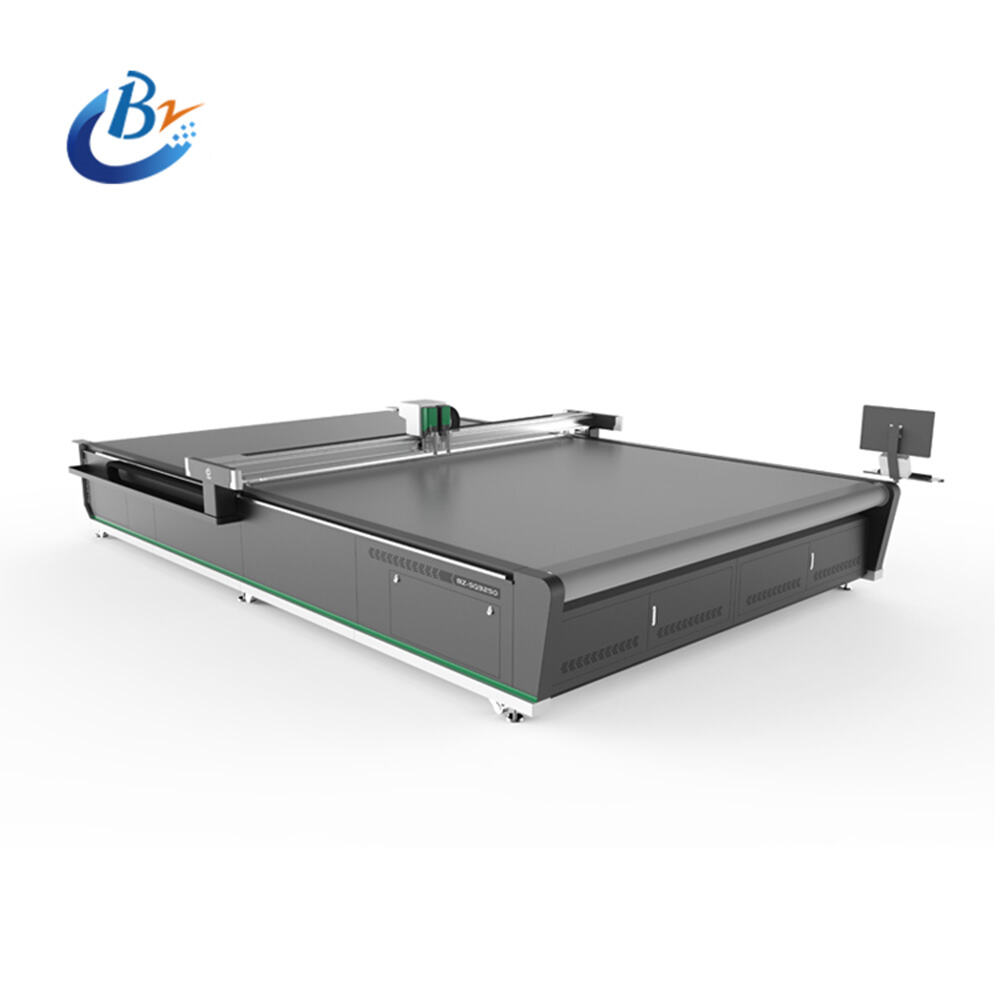
In modern textile manufacturing, production consistency is not simply a quality goal — it is a competitive necessity. When cut pieces vary even slightly in dimension, shape, or edge quality from one batch to the next, downstream processes like sewing, assembly, and finishing all suffer the consequences. An automatic textile cutting machine addresses this challenge at its root by replacing the variability of manual intervention with precision-engineered, repeatable cutting execution. Understanding exactly how this technology delivers batch-to-batch consistency is critical for any manufacturer looking to scale operations without sacrificing quality.
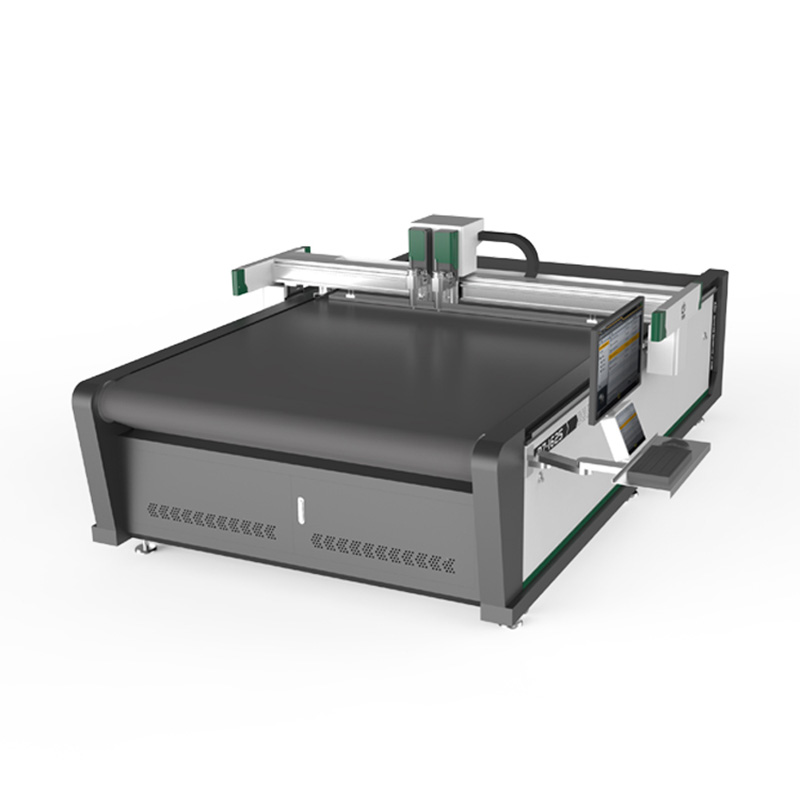
The answer lies in the systematic elimination of human error, the digitization of cutting patterns, and the integration of intelligent control systems. A well-configured automatic textile cutting machine does not simply cut faster than a manual operator — it cuts with the same accuracy on the ten-thousandth piece as it does on the first. This article examines the specific mechanisms through which automated cutting technology improves production consistency, and why that consistency translates into measurable business value across industries ranging from apparel to technical textiles.
The Role of Digital Pattern Control in Batch Uniformity
Eliminating Pattern Drift Between Runs
One of the most persistent sources of inconsistency in traditional textile cutting is the gradual drift that occurs when human operators re-lay patterns across multiple shifts or production runs. Even skilled workers introduce micro-variations in pattern placement, pressure, and blade angle. Over hundreds or thousands of pieces, these small deviations compound into measurable quality differences between early-batch and late-batch components.
An automatic textile cutting machine stores cutting patterns as precise digital files. Every time a batch begins, the machine reads the same coordinates, the same cutting paths, and the same depth parameters — without reinterpretation. This eliminates the concept of pattern drift entirely. The first piece cut from Batch 1 and the first piece cut from Batch 100 are governed by the same exact digital instruction set, producing geometrically identical results.
This digital consistency is especially valuable in industries where pattern files are shared across multiple production sites. A centrally managed cutting file can be deployed to any automatic textile cutting machine in the network, ensuring that output from different factories meets the same dimensional standard without requiring manual recalibration at each location.
Standardized Nesting and Material Utilization
Batch consistency is not only about whether individual pieces are cut correctly — it also involves how fabric is used across batches. In manual operations, the nesting of pattern pieces on fabric is subject to operator judgment, which means material utilization rates and cut sequences can vary significantly from run to run. This inconsistency creates unpredictability in material consumption, cost estimation, and waste management.
Automated nesting software integrated with an automatic textile cutting machine calculates the optimal arrangement of pattern pieces before every cut. This nesting plan is stored, reused, and refined based on actual fabric dimensions and grain direction. The result is a consistent utilization rate across all production batches, which both stabilizes material costs and ensures that cut pieces are always taken from the same relative position within the fabric structure.
When fabric position relative to grain lines is standardized, the physical properties of cut components — stretch direction, drape, and surface texture — remain uniform across batches. This is particularly important for garments or technical textile products where material orientation affects final performance.
How Mechanical Precision Sustains Cut Quality Across High Volumes
Consistent Blade Pressure and Speed
Human fatigue is a well-documented source of quality degradation in manual cutting operations. As a shift progresses, operators cut with less precision, apply inconsistent blade pressure, and make more errors in path alignment. These variations may be subtle in isolation, but across a full production batch they create measurable dimensional inconsistencies that require rework or result in rejected components.
An automatic textile cutting machine maintains the same blade speed, cutting pressure, and path accuracy throughout an entire production run regardless of duration. CNC-controlled servo motors govern every movement with sub-millimeter precision, and this precision does not degrade over time within a single shift or across extended production days. The machine executes the five-hundredth cut with the same mechanical control as the first.
This sustained mechanical precision is what makes automated cutting so valuable for large batch production. The benefits of consistency compound at scale — the larger the batch, the greater the quality advantage that an automatic textile cutting machine delivers over manual or semi-automated alternatives.
Knife and Blade Management Systems
Blade wear is a physical reality in any cutting operation, and in manual environments it is often managed inconsistently. Operators may delay blade changes based on personal judgment, resulting in batches where edge quality degrades progressively before a replacement is made. This creates within-batch inconsistency that is particularly difficult to detect and control.
Advanced automatic textile cutting machine systems incorporate blade wear monitoring and automated sharpening or replacement cycles. Sensors track the number of cuts performed and the resistance encountered during cutting, triggering maintenance events before quality is affected. This proactive approach ensures that blade condition remains within a defined performance range throughout the entire production batch.
The result is a measurably more uniform edge quality across all cut components. Consistent edge quality reduces fraying, improves seam alignment in assembly, and produces a cleaner finished product — all of which are direct contributions to batch-level consistency that are invisible to operators who rely on reactive blade management.
Sensor Integration and Real-Time Quality Monitoring
Fabric Tension and Feed Control
Inconsistent fabric tension is one of the most underappreciated sources of batch variation in textile cutting. When fabric is fed at varying tension levels, the cut dimensions change even when the cutting path remains identical. A piece cut under higher tension will contract slightly after cutting, producing a component that is dimensionally different from one cut under normal tension — even though both were cut using the same pattern file.
Modern automatic textile cutting machine designs incorporate tension sensing and feed rate control systems that actively maintain uniform fabric tension throughout the cutting process. These systems continuously adjust the speed and resistance of the fabric feed mechanism to compensate for variations in roll density, fabric weight distribution, and material elasticity. The outcome is a consistent dimensional result even when working with materials that have inherently variable physical properties.
For manufacturers working with stretch fabrics, wovens with tight tolerances, or layered multi-ply cutting, this tension management capability is not a luxury feature — it is the primary mechanism through which batch-level dimensional consistency is achieved and maintained.
Vision Systems and Cut Path Verification
Some automatic textile cutting machine configurations integrate camera-based vision systems that verify fabric alignment, pattern position, and surface condition before and during cutting. These systems detect fabric misalignment, identify flaws in the material surface, and confirm that the cutting head is positioned correctly relative to the intended path before each cut cycle begins.
When a deviation is detected, the system either corrects the positioning automatically or alerts the operator before proceeding — preventing defective components from being produced rather than catching them after the fact. This closed-loop approach to quality management significantly reduces the rate of defective output within a batch and ensures that all accepted pieces meet the same standard.
The integration of vision technology effectively extends the quality control process into the cutting stage itself, creating a production environment where consistency is enforced in real time rather than verified through post-production inspection. This fundamentally changes the economics of quality management for high-volume textile manufacturers.
Operational Standardization and Cross-Shift Consistency
Removing Operator Variability From the Equation
In manual cutting environments, each operator brings a different skill level, physical approach, and judgment framework to the work. This means that output quality varies not only between batches but also between shifts, between operators, and even within a single operator's working day. Standardizing quality in this environment requires constant supervision, extensive training, and ongoing auditing — all of which are resource-intensive and imperfect.
Deploying an automatic textile cutting machine restructures the role of the operator from active cutter to system supervisor. The machine executes all cutting decisions based on programmed parameters, while the operator monitors system performance, loads materials, and addresses exception conditions. This role shift removes operator cutting skill variability from the production outcome, replacing it with consistent machine execution that is identical regardless of who is supervising the system.
This structural change is particularly impactful for manufacturers operating multiple shifts. When two different shift teams produce output using the same automatic textile cutting machine running the same digital cutting files, the cross-shift consistency of cut components is determined by machine parameters rather than individual operator skill — a fundamentally more reliable quality control mechanism.
Audit Trails and Process Documentation
An often-overlooked contributor to batch consistency is the ability to document and audit what actually happened during each production run. Manual cutting operations generate very little reliable process data — there is no record of the specific path taken, the pressure applied, or the exact time each piece was cut. When a quality issue is discovered, it is difficult to trace back to a root cause and even harder to prove that corrective action was effective.
An automatic textile cutting machine generates detailed production logs for every cutting session. These logs record the cutting file used, the machine settings applied, the time and sequence of each cut, and any system alerts or interruptions that occurred. This data creates an auditable production history that quality managers can use to identify patterns, verify compliance, and demonstrate process control to customers or certification bodies.
The availability of structured production data also enables data-driven process improvement. When batch quality issues do arise, the cutting machine's logs provide the first and most reliable source of information for root cause analysis — dramatically reducing the time and cost of quality investigations and enabling faster corrective action.
Business Impact of Cutting Consistency on Downstream Operations
Reducing Rework and Waste in Assembly
The economic case for investing in an automatic textile cutting machine often centers on speed and throughput, but the downstream impact on rework costs is equally significant. When cut components are dimensionally inconsistent, sewing operators must compensate with adjustments that slow their throughput and introduce additional variability. Seam allowances that vary by even a few millimeters create fitting problems, alignment failures, and increased rejection rates at final inspection.
Consistent cut components from an automatic textile cutting machine allow sewing and assembly operations to be optimized for standard inputs. Feed speeds, presser foot settings, and seam guides can be calibrated to a known component specification and maintained at those settings throughout a batch. This standardization of inputs in assembly dramatically reduces per-unit production time and lowers the overall defect rate at the finished goods level.
The cumulative savings from reduced rework, lower rejection rates, and faster assembly throughput typically represent a return on investment that is directly attributable to the cutting quality improvements delivered by an automatic textile cutting machine. Manufacturers who have made this transition consistently report measurable improvements in overall equipment effectiveness and production line efficiency.
Supporting Customer Quality Requirements and Certifications
For manufacturers supplying to major brands, retail chains, or industrial end-users, demonstrating consistent product quality across batches is often a contractual requirement. Customers increasingly specify dimensional tolerances, edge quality standards, and inspection protocols that must be met on every delivery — not just on initial samples. Meeting these requirements consistently with manual cutting is exceptionally difficult and expensive.
An automatic textile cutting machine provides the process control infrastructure needed to meet tight customer specifications reliably. Because cutting parameters are digitally defined and machine-executed, manufacturers can provide data-backed quality assurances that are credible to sophisticated buyers. The audit trail generated by the machine supports certification processes and customer audits by documenting the consistency of the production process itself.
This ability to substantiate quality claims with process data is becoming a meaningful competitive differentiator in B2B textile supply chains. As customer quality requirements continue to tighten, manufacturers equipped with an automatic textile cutting machine are better positioned to qualify for preferred supplier status and long-term supply agreements than those relying on manual methods.
FAQ
How does an automatic textile cutting machine maintain consistency when working with different fabric types?
An automatic textile cutting machine adapts to different fabric types through adjustable cutting parameters including blade type, cutting speed, pressure, and feed tension. These parameters are stored as part of the cutting file for each material, so when switching between fabric types, the machine reloads the appropriate settings and executes the cut profile matched to that material's physical characteristics. This ensures consistent results across different materials without requiring operator reinterpretation of settings.
What is the typical dimensional accuracy maintained by an automatic textile cutting machine?
Most modern automatic textile cutting machines achieve dimensional accuracy within ±0.1 mm to ±0.5 mm depending on the specific model, cutting speed, and material type. This level of precision is maintained consistently across large production volumes and is significantly tighter than what can be reliably achieved through skilled manual cutting. The exact tolerance specification should be verified with the machine supplier based on the intended application and material type.
Can an automatic textile cutting machine handle layered multi-ply cutting while maintaining consistency?
Yes, an automatic textile cutting machine is specifically designed to handle multi-ply fabric layers with consistent cut quality throughout the layer stack. The machine's blade speed, pressure, and feed parameters are calibrated to cut cleanly through all layers simultaneously without distortion. However, the number of layers that can be cut consistently depends on the machine's cutting capacity and the specific fabric weight and structure, so manufacturers should verify ply capacity with the equipment specifications before planning a multi-ply workflow.
How does switching to an automatic textile cutting machine affect quality inspection requirements?
Switching to an automatic textile cutting machine typically reduces the frequency and intensity of dimensional inspection required in the cutting department, because the machine's consistent output makes inspection sampling statistically more reliable. However, it does not eliminate inspection entirely. Quality managers generally shift from inspecting for random operator errors to monitoring for systematic issues such as blade wear, file errors, or material loading inconsistencies. The machine's production logs also make it easier to implement statistical process control approaches that provide stronger quality assurance with less manual inspection labor.
Table of Contents
- The Role of Digital Pattern Control in Batch Uniformity
- How Mechanical Precision Sustains Cut Quality Across High Volumes
- Sensor Integration and Real-Time Quality Monitoring
- Operational Standardization and Cross-Shift Consistency
- Business Impact of Cutting Consistency on Downstream Operations
-
FAQ
- How does an automatic textile cutting machine maintain consistency when working with different fabric types?
- What is the typical dimensional accuracy maintained by an automatic textile cutting machine?
- Can an automatic textile cutting machine handle layered multi-ply cutting while maintaining consistency?
- How does switching to an automatic textile cutting machine affect quality inspection requirements?