
 EN
EN



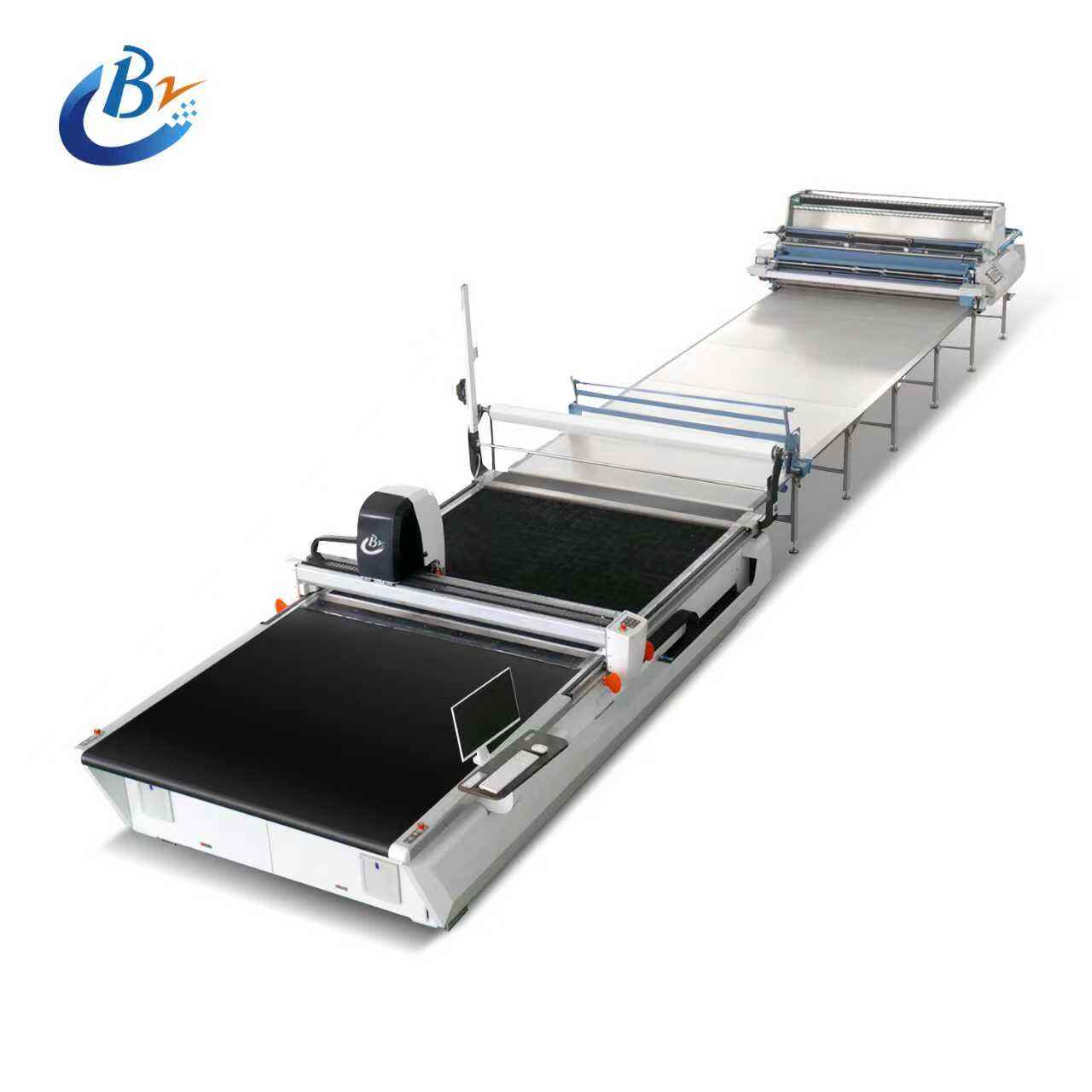
When manufacturers face the challenge of slicing through dense foam blocks, multi-layered composites, or resilient rubber gaskets, the cutting method they choose can define product quality, cycle times, and tooling costs for years. high-frequency oscillation cutting has emerged as the preferred technology for these demanding applications precisely because it addresses the core mechanical challenges that other methods struggle to overcome. Understanding what makes this approach so well-suited to thick foam and composite materials requires looking at both the physics of the blade motion and the real-world performance outcomes it delivers on the production floor.
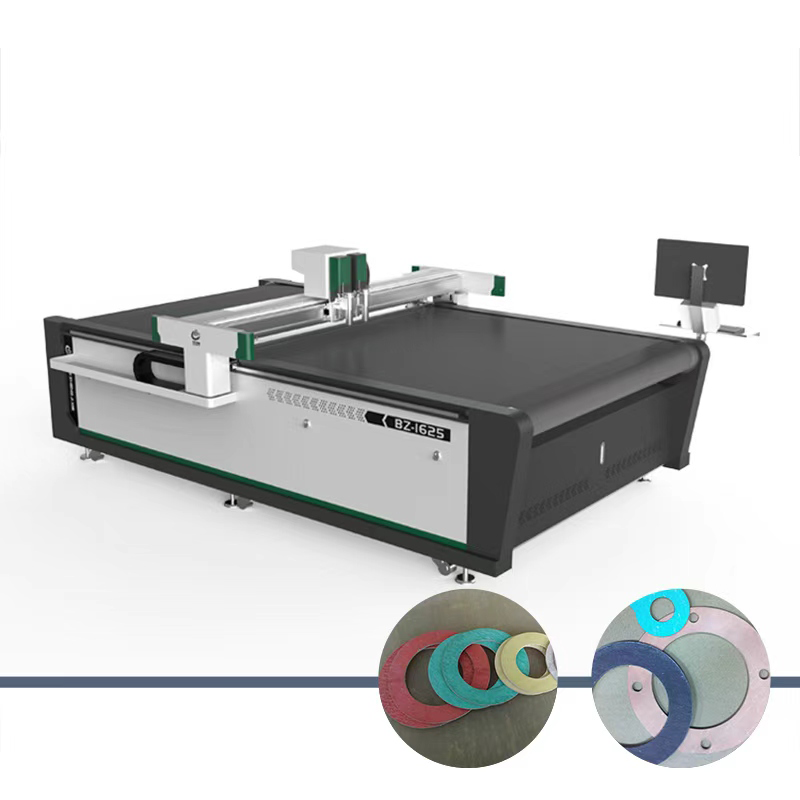
High-frequency oscillation cutting relies on a blade that reciprocates at precisely controlled frequencies, typically ranging from several thousand to tens of thousands of strokes per minute. This rapid back-and-forth motion dramatically reduces the effective cutting resistance, allowing the knife to pass through materials that would compress, tear, or delaminate under conventional drag-cutting or rotary methods. For industrial buyers evaluating CNC knife cutter systems for foam board, EVA, rubber gaskets, and sponge materials, the oscillation mechanism is not simply a feature — it is the engineering reason why clean, accurate cuts become achievable even at significant material depths.
The Physics Behind High-Frequency Oscillation Cutting
How Oscillating Motion Reduces Cutting Resistance
In conventional cutting, a blade is dragged or pressed through material in a single continuous direction. Dense foam and composite substrates respond to this force by compressing ahead of the blade edge, which increases the resistance the cutter must overcome and often results in ragged edges or deformation at the cut face. High-frequency oscillation cutting changes this dynamic entirely by converting linear blade travel into a series of microscopic slicing actions.
Each individual oscillation cycle allows the blade edge to momentarily release compressive pressure before the next stroke reengages the material. This cyclical pressure release prevents the foam from locking against the blade, and in composite materials it prevents inter-layer stress from building up to the point of delamination. The result is a cutting action that feels, from the material's perspective, far closer to a series of precise incisions than to a bulldozing push.
The frequency of oscillation is a critical engineering parameter. At higher frequencies, the individual strokes overlap more closely, producing a smoother cut surface. At lower frequencies optimized for specific material densities, the blade can achieve a more aggressive bite with each cycle, allowing it to work through particularly resistant composites without stalling. This tunability is a key reason high-frequency oscillation cutting is adaptable across a wide spectrum of industrial materials.
Energy Transfer and Heat Management in Thick Materials
Thick foam and composite materials are inherently poor conductors of heat. When a blade passes through them, frictional heat generated at the cutting interface has nowhere to dissipate quickly. In drag-cut or saw-based systems, this heat accumulates, melting thermoplastic foams, scorching adhesive layers in composites, or causing the blade to dull prematurely. High-frequency oscillation cutting mitigates this issue through the mechanics of the motion itself.
Because each oscillation stroke is brief and the blade momentarily withdraws from full contact with the kerf walls on the return stroke, there is a microscopic ventilation effect along the cut path. This allows heat to dissipate more effectively than in a continuous-contact cutting scenario. For EVA foam, polyurethane foam, and rubber-based materials — all of which have relatively low thermal thresholds — this thermal management advantage directly translates into cleaner cut surfaces and longer blade life.
For composite panels that combine foam cores with fiber-reinforced skins or adhesive-bonded layers, heat control is even more critical. Adhesive layers can soften and re-bond behind the blade if temperatures rise, creating smeared or sealed cut edges. The intermittent contact pattern inherent in high-frequency oscillation cutting keeps interface temperatures low enough to preserve the structural integrity of each layer through the cut.
Why Thick Foam Specifically Benefits from Oscillation Technology
Compression Recovery and Edge Quality
Foam materials — whether open-cell polyurethane, closed-cell EVA, or cross-linked polyethylene — share a common mechanical characteristic: they compress elastically under load and recover when the load is removed. This property makes them exceptionally useful as cushioning, sealing, and insulating materials, but it creates a serious problem for cutting systems that rely on sustained blade pressure. The foam simply compresses out of the way, then springs back once the blade passes, resulting in a cut that is narrower at depth than at the surface.
High-frequency oscillation cutting overcomes this by ensuring the blade actively slices through the cell walls rather than simply displacing them. The rapid oscillation velocity at the blade tip is high enough to sever foam cell structures cleanly before they have time to recover elastically during the cutting stroke. This produces consistent kerf widths from surface to base — a critical requirement when cutting foam gaskets, packaging inserts, or acoustic panels to tight dimensional tolerances.
Edge quality in thick foam is not merely an aesthetic concern. For sealing gaskets, a compressed or torn edge will not seat correctly in an assembly, leading to leakage or premature failure. For packaging inserts, a ragged foam edge can damage the product it is meant to protect. High-frequency oscillation cutting produces the smooth, vertical cut walls that these functional applications demand, directly because the oscillating action prevents the elastic compression distortion that other methods produce.
Depth Capability Without Material Distortion
As foam thickness increases, the challenges for any cutting system multiply. The blade must maintain its trajectory over a longer cutting path, the side friction against the kerf walls increases, and any deviation from vertical blade orientation becomes magnified at depth. High-frequency oscillation cutting addresses these scaling challenges in a way that purely mechanical cutting methods cannot easily replicate.
The oscillating action continuously clears the kerf of small foam particles and debris on each return stroke, preventing the accumulation of material that would otherwise wedge the blade off its path. This self-clearing effect is especially important in very thick foam blocks — 100mm or more — where conventional blades often bind or deflect before reaching the bottom of the cut. With high-frequency oscillation cutting, consistent vertical accuracy is maintained throughout the full depth of the material.
CNC knife cutter systems using oscillation technology can typically cut foam thicknesses that would be impractical for rotary or drag-knife configurations. This makes the technology particularly relevant for upholstery manufacturers, automotive seating suppliers, industrial packaging producers, and acoustic panel fabricators who regularly process thick foam stock as part of their core production workflow.
Composite Material Cutting and the Oscillation Advantage
Managing Multi-Layer Delamination Risk
Composite materials present a different but equally demanding set of challenges. Whether the composite consists of a foam core bonded to aluminum facing, a rubber sheet reinforced with fabric layers, or a sponge substrate laminated to a rigid backing, each interface between layers is a potential delamination point during cutting. High-frequency oscillation cutting is particularly well-suited to managing this risk because it distributes cutting forces across many rapid, low-pressure strokes rather than concentrating them in a single sustained push.
Delamination occurs when the peel force at a bonded interface exceeds the adhesive or cohesive strength of that bond. In drag cutting, the blade acts as a wedge that generates significant lateral peel forces as it advances. In high-frequency oscillation cutting, the blade's rapid oscillation means that each stroke delivers a controlled slicing force with minimal lateral displacement, keeping peel forces well below the threshold that would cause layer separation.
This characteristic is especially valuable in composite sealing materials, multi-density foam assemblies, and EVA-based products that incorporate rigid inserts or stiffening layers. Manufacturers who have transitioned from rotary or drag-knife systems to high-frequency oscillation cutting report significant reductions in edge delamination defects, which translates directly into lower scrap rates and reduced rework costs.
Fiber-Reinforced and Rubber-Based Composites
Some of the most demanding composite cutting applications involve materials that contain embedded fibers — woven glass, non-woven polyester, or aramid reinforcement layers within rubber or foam matrices. These fibers are designed to resist tearing and fracture, which makes them inherently resistant to being cut by methods that rely on material compression or fracture mechanics. High-frequency oscillation cutting, by contrast, severs fibers through a shearing action on each oscillation stroke.
The cumulative effect of many rapid shearing strokes allows the blade to work progressively through fiber reinforcement without the blade deflection or stalling that would occur with a single sustained cutting force. This makes high-frequency oscillation cutting practical for rubber gasket materials with fabric backing, EVA composites with glass-fiber stiffening layers, and similar hybrid materials that appear frequently in automotive, HVAC, and industrial sealing applications.
Blade geometry selection works in concert with oscillation parameters to optimize performance on these materials. Thinner, sharper blade profiles maximize the shearing efficiency of each oscillation stroke on fiber-reinforced substrates, while slightly broader blades may be preferred for softer rubber composites where stability at depth is the primary concern. The flexibility to adjust both blade type and oscillation frequency is what gives modern CNC knife cutters using this technology their broad material compatibility.
Operational and Production Advantages of Oscillation-Based CNC Cutting
Speed, Accuracy, and Repeatability on the Production Line
Beyond the material science advantages, high-frequency oscillation cutting delivers measurable production benefits that matter to B2B buyers making capital investment decisions. The technology enables faster traverse speeds on thick materials compared to drag cutting because the oscillation action does the cutting work while the gantry motion simply positions the blade along the programmed path. This decoupling of cutting action from traverse speed allows process engineers to optimize each axis of motion independently for maximum throughput.
CNC knife cutter systems using high-frequency oscillation cutting maintain consistent accuracy across long production runs because the oscillation mechanism minimizes the cumulative blade wear that would otherwise cause dimensional drift. The rapid, shearing motion distributes wear more evenly along the blade edge than sustained drag cutting, which concentrates wear at the leading tip. More consistent blade condition across a production run means tighter dimensional consistency across all parts cut during that run.
Repeatability is a particularly important metric in industries such as automotive seating, where foam components must match precise dimensional specifications across thousands of units. High-frequency oscillation cutting on a well-configured CNC platform delivers the combination of part-to-part consistency and edge quality that assembly processes downstream require, reducing the inspection burden and the risk of fit issues at the assembly stage.
Tooling Costs and Maintenance Considerations
A common concern when evaluating oscillation-based cutting systems is whether the mechanical complexity of the oscillation drive unit adds unacceptable maintenance overhead compared to simpler drag-knife configurations. In practice, modern CNC knife cutters with high-frequency oscillation cutting mechanisms are engineered for durability in continuous production environments, with drive components rated for tens of millions of oscillation cycles before service intervals.
Blade consumption costs must also be considered in context. While oscillation blades may appear to have a higher unit cost than drag-knife blades, the lower cutting resistance they experience in thick foam and composite materials typically results in longer individual blade life. The absence of the bending and dragging forces that quickly dull drag-knife edges means each oscillation blade maintains its cutting efficiency for more linear meters of cut before replacement is required.
Net tooling cost per unit of output — a more meaningful metric than blade unit price — consistently favors high-frequency oscillation cutting when the material set includes thick foam, rubber, or composites. This economic advantage compounds over time and is an important factor in the total cost of ownership calculation for production environments where these materials form a significant portion of the cutting workload.
FAQ
What material thicknesses can high-frequency oscillation cutting handle effectively?
High-frequency oscillation cutting is effective across a wide range of material thicknesses. For foam materials such as polyurethane, EVA, and sponge, CNC knife cutters using this technology can typically process thicknesses from a few millimeters up to 100mm or more, depending on the specific machine configuration and blade selection. Composite materials with foam cores and rigid or flexible facings can also be cut at substantial thicknesses, though the exact capability varies with the density and composition of each specific material.
How does high-frequency oscillation cutting compare to rotary cutting for foam applications?
Rotary cutting uses a spinning disc blade that generates heat through continuous friction and tends to compress and melt thermoplastic foam edges. High-frequency oscillation cutting produces cleaner, cooler cuts by delivering shearing strokes rather than sustained friction. For thick foam applications where edge quality and dimensional accuracy are critical, high-frequency oscillation cutting consistently outperforms rotary methods by preventing edge melting, compression distortion, and kerf width variation at depth.
Is high-frequency oscillation cutting suitable for rubber gasket production?
Yes, high-frequency oscillation cutting is well-suited for rubber gasket production. Rubber's elasticity presents the same recovery and compression challenges as foam, and the oscillation mechanism handles these challenges in the same way — by severing the material with rapid shearing strokes rather than displacing it. For rubber gaskets that require precise internal profiles, tight dimensional tolerances, or clean edge surfaces to seal correctly, high-frequency oscillation cutting on a CNC knife cutter platform is a highly appropriate and widely used production method.
What CNC knife cutter features should buyers prioritize when sourcing for thick foam and composite cutting?
Buyers evaluating CNC knife cutter machines for thick foam and composite applications should prioritize oscillation frequency range and adjustability, maximum cutting depth, blade compatibility across different profiles, and the rigidity of the machine gantry structure. A rigid frame is essential to maintain cutting accuracy when blade resistance increases with material thickness. Additionally, vacuum hold-down capability is important for preventing foam and composite sheets from shifting during the cut, which would undermine the dimensional accuracy that high-frequency oscillation cutting makes possible.
Table of Contents
- The Physics Behind High-Frequency Oscillation Cutting
- Why Thick Foam Specifically Benefits from Oscillation Technology
- Composite Material Cutting and the Oscillation Advantage
- Operational and Production Advantages of Oscillation-Based CNC Cutting
-
FAQ
- What material thicknesses can high-frequency oscillation cutting handle effectively?
- How does high-frequency oscillation cutting compare to rotary cutting for foam applications?
- Is high-frequency oscillation cutting suitable for rubber gasket production?
- What CNC knife cutter features should buyers prioritize when sourcing for thick foam and composite cutting?