
 EN



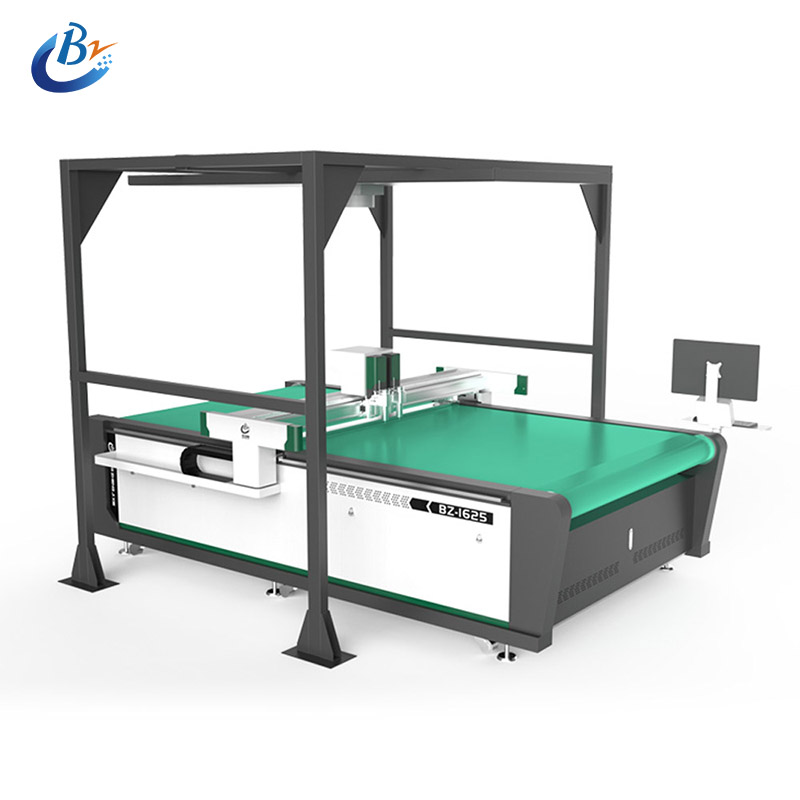
The blade determines how cleanly a CNC leather cutting machine separates material, follows tight curves, and handles different thicknesses. Genuine hide and synthetic leather do not behave alike: natural grain, stretch, backing, coatings, and layered construction all affect the cut. Choosing the right blade therefore starts with the material and the finished part, not with a one-size-fits-all tool.

In most production settings, a CNC leather cutting machine can use oscillating knives, drag knives, or rotary blades, with the best option depending on stock and cut geometry. Genuine leather often calls for a sharp, controlled blade that limits drag through the hide. Synthetic materials may need a different edge or motion to avoid pulling, stretching, or damaging a laminated surface. Understanding those differences makes blade selection more reliable.
Blade options for leather cutting
Oscillating knives for controlled cuts
An oscillating knife moves rapidly up and down as the CNC leather cutting machine follows a programmed path. That motion helps the edge pass through thicker or denser stock without relying only on forward pressure, making it a flexible choice for many genuine hides and synthetic sheets. A CNC leather cutting machine fitted with a sharp straight oscillating blade can produce clean contours for panels, upholstery components, footwear pieces, and shaped accessories. Operators should match blade length and stiffness to material thickness: a blade that is too short may not clear the backing, while excess exposed length can deflect on tight curves. For repeatable work, the CNC leather cutting machine also needs stable material hold-down and sensible cutting speed. Trial cuts reveal whether the edge is slicing cleanly or leaving fibers and backing attached.
Drag knives for thin, flexible stock
A drag knife is pulled through the sheet by the CNC leather cutting machine rather than driven in an oscillating motion. Its simple cutting action can suit thin synthetic leather, flexible lining, and other relatively soft materials when patterns have broad curves and limited detail. A CNC leather cutting machine using a drag blade depends on the edge staying sharp and the sheet remaining flat, because the tool can tug on stretchy stock or shift loose layers. Genuine leather may also be cut with a drag knife when hide thickness and grain permit, but dense or uneven areas can increase resistance. Before a production run, check the CNC leather cutting machine settings on a representative offcut and inspect corners, small features, and the underside. If the edge pulls material instead of slicing it, choose another blade type or adjust the setup.
Matching the blade to material behavior
Genuine leather and natural variation
Genuine leather varies across a hide, so the CNC leather cutting machine must cope with changes in thickness, firmness, and grain direction. An oscillating knife is often useful where a consistent through-cut is needed, while a drag knife may work on thinner, more uniform sections. Select the blade for the thickest relevant area, then verify that the CNC leather cutting machine can cut the thinner zones without excessive pressure or distortion. Keep the hide secured, but avoid hold-down methods that mark a delicate finish. A sharp edge matters because dull blades can compress the surface before separating fibers. During nesting, place important visible parts away from scars and irregular edges, and run test cuts across more than one area. The cnc leather cutting machine should be assessed on the actual hide, not just a sample from a uniform region.
Synthetic leather, coatings, and backing
Synthetic leather can combine a polymer face with fabric, foam, or adhesive layers, so a CNC leather cutting machine needs a blade that cuts the full stack without lifting the top film. Oscillating blades suit many layered or thicker constructions; drag knives may be appropriate for thin, stable sheets. A rotary blade, where supported, can roll through flexible material with less scraping, but its suitability depends on the machine head and the product structure. Confirm that the CNC leather cutting machine produces a complete edge through both face and backing. Excessive heat or friction may affect some coated materials, while a blunt edge can cause fraying or delamination. Test the exact grade and thickness, inspect the cut face, and adjust speed, blade depth, and hold-down as needed. Do not assume that two materials sold as synthetic leather will cut identically.
Practical selection and setup checks
Use geometry and finish to guide selection
The part design helps determine which blade a CNC leather cutting machine should use. Tight radii, small slots, and intricate outlines demand a blade that can turn accurately without dragging the sheet; broad, uncomplicated profiles allow more flexibility. For a clean visible edge, assess both the top surface and the underside, since a cut that looks complete from above may leave backing fibers connected below. A CNC leather cutting machine working on multiple layers also requires a suitable blade length and a stable stack. Consider whether the pattern includes holes, notches, or narrow bridges, because these features can expose weaknesses in blade control. Run a sample containing the most demanding details before committing a full hide or roll. Choose the tool that meets edge and dimensional requirements consistently, rather than selecting by cutting speed alone.
Validate settings before production
Blade choice is only one part of the process; a CNC leather cutting machine must also be set up for the material. Check blade condition, projection, cutting depth, feed rate, and hold-down, then cut a sample using the production material and pattern. If edges show tearing, incomplete separation, or surface lift, change one setting at a time and inspect again. The CNC leather cutting machine should be tested across representative thicknesses and grain or stretch directions, especially when a batch includes natural hide variation. Record the blade type and working settings that produce acceptable parts so operators can repeat the setup. Recheck after blade replacement, a material change, or a change in the number of layers. For a suitable digital cutting configuration, review this cnc leather cutting machine as one example of equipment intended for leather and shoe-material workflows.
FAQ
Which blade is a practical starting point for mixed leather work?
An oscillating knife is a versatile starting point for many genuine and synthetic materials, but confirm the fit with sample cuts. A CNC leather cutting machine should be tested on the actual thickness, backing, and pattern details before production.
Can one blade cut genuine and synthetic leather?
Sometimes. A CNC leather cutting machine may use the same blade across several materials if each cut meets edge and dimensional requirements. Differences in grain, coating, stretch, and backing mean testing remains essential.
When should a rotary blade be considered?
Consider a rotary blade when the machine supports it and flexible stock benefits from rolling contact. Check the CNC leather cutting machine setup and inspect both faces, since material construction and geometry affect the result.