
 EN
EN



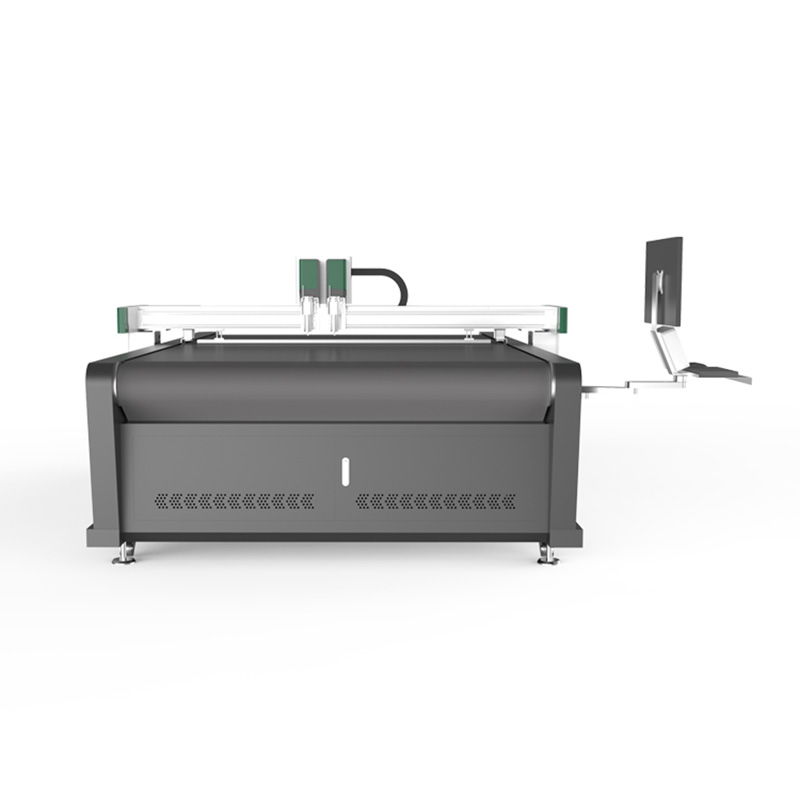
Blade longevity represents one of the most critical cost and productivity factors in automated textile cutting operations. An auto fabric cutter equipped with programmable sharpening technology transforms blade maintenance from reactive replacement cycles into proactive condition management, directly impacting operational efficiency and per-unit production costs. This integrated approach to blade preservation addresses the fundamental wear patterns that limit cutting precision and increase downtime in high-volume manufacturing environments.
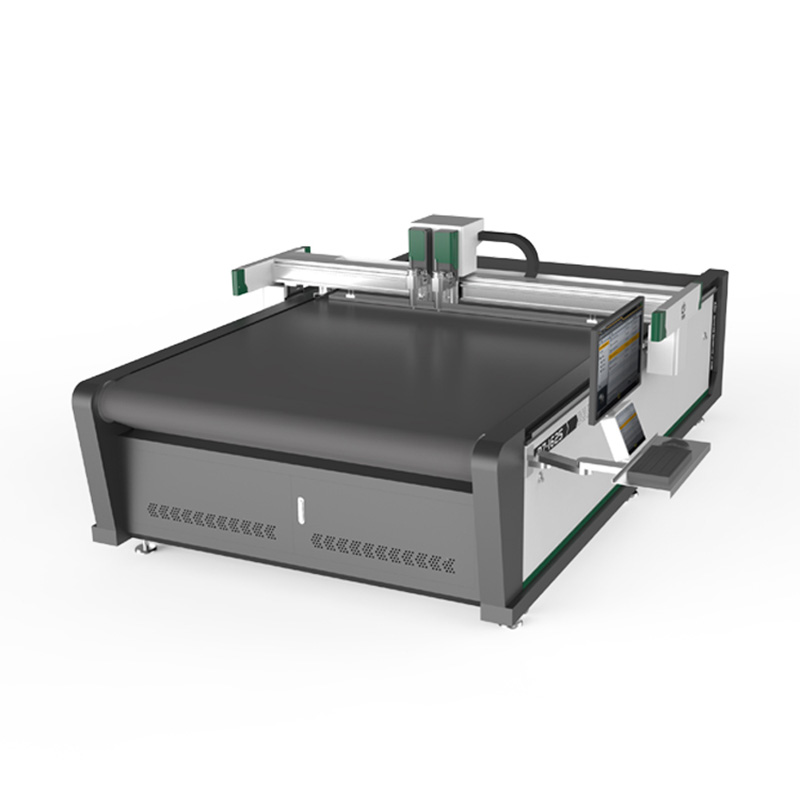
The mechanism by which programmable sharpening extends blade service life involves precise material removal algorithms that restore cutting geometry without excessive grinding. Unlike manual sharpening methods that rely on operator judgment and often remove too much carbide material, automated systems use sensor feedback and predetermined parameters to maintain optimal blade angles throughout the tool's operational lifecycle. This controlled approach preserves the structural integrity of the cutting edge while eliminating micro-chipping and edge rounding that degrade cut quality in fabric processing applications.
Understanding Blade Wear Mechanisms in Automated Fabric Cutting
Primary Degradation Patterns in High-Speed Textile Processing
Blade degradation in an auto fabric cutter occurs through several distinct mechanical and thermal processes that progressively diminish cutting performance. Abrasive wear from synthetic fiber contact creates microscopic surface roughness along the cutting edge, while adhesive wear from certain fabric finishes causes material transfer that builds up on the blade face. These cumulative effects increase cutting resistance and generate localized heat, which accelerates further deterioration through thermal softening of the blade substrate material.
The rate of wear progression varies significantly based on fabric composition, with aramid and fiberglass-reinforced textiles producing substantially higher abrasion rates than natural cotton or wool materials. Cutting speed parameters also influence wear patterns, as higher blade velocities generate increased frictional heating that can alter the metallurgical properties of the cutting edge. Understanding these fundamental wear mechanisms enables programmable sharpening systems to apply targeted restoration protocols that address specific degradation types rather than using generic grinding cycles.
Impact of Edge Geometry Changes on Cutting Performance
As the blade in an auto fabric cutter experiences operational wear, the initially acute cutting angle becomes progressively rounded through material loss at the apex. This geometry change increases the effective cutting thickness, requiring greater penetration force and producing less clean edge separation in the fabric. The result manifests as increased edge fraying, reduced dimensional accuracy in cut parts, and higher mechanical stress on drive systems that must compensate for increased cutting resistance.
Measurement studies demonstrate that edge radius increases of just fifteen to twenty micrometers can reduce cutting efficiency by twelve to eighteen percent in synthetic textile applications. This seemingly minor geometric change translates directly into measurable increases in power consumption, slower cutting speeds, and higher rejection rates for precision components. Programmable sharpening addresses this progression by detecting early-stage geometry deviations and implementing restoration cycles before performance degradation reaches levels that affect production quality or throughput.
Programmable Sharpening Technology Architecture and Operation
Sensor Integration and Condition Monitoring Systems
Modern programmable sharpening systems integrate multiple sensor types to continuously assess blade condition during operation of the auto fabric cutter. Force sensors monitor cutting resistance in real-time, detecting increases that indicate edge dulling before visible quality defects appear in cut fabric. Acoustic emission sensors identify characteristic frequency patterns associated with micro-chipping or edge fracture events, enabling immediate response to sudden degradation incidents rather than waiting for scheduled inspection intervals.
Vision systems provide direct geometric measurement of blade edge profiles using high-magnification optical or laser scanning techniques. These systems capture edge radius, angle deviations, and surface irregularities with micrometer-level precision, creating quantitative condition data that drives sharpening protocol selection. The combination of indirect performance indicators from force and acoustic sensors with direct geometric measurement from vision systems provides comprehensive blade health assessment that supports optimized maintenance scheduling and minimal material removal during restoration cycles.
Adaptive Grinding Protocols and Material Removal Control
The programmable sharpening capability distinguishes advanced auto fabric cutter systems through adaptive grinding protocols that adjust material removal rates and wheel positioning based on measured blade condition. Rather than applying uniform grinding cycles regardless of actual wear state, these systems calculate minimum necessary material removal to restore target edge geometry. This precision approach preserves blade substrate thickness and extends the total number of sharpening cycles possible before blade retirement becomes necessary.
Control algorithms manage grinding wheel feed rates, dwell times, and traverse patterns to achieve consistent edge restoration while minimizing heat generation that could affect blade temper. Multi-stage protocols often begin with coarse material removal to address major geometry deviations, followed by fine finishing passes that establish the final edge radius and surface finish. Coolant delivery systems coordinate with grinding parameters to maintain thermal stability throughout the sharpening cycle, preventing the metallurgical damage that can occur when excessive heat alters the hardness profile of the cutting edge.
Quantifiable Benefits of Automated Blade Maintenance
Service Life Extension Through Optimized Sharpening Intervals
Documented case studies from textile manufacturing facilities demonstrate that programmable sharpening extends blade service life by forty to sixty percent compared to manual maintenance approaches. This extension results from two primary factors: prevention of catastrophic failure modes through early intervention, and preservation of blade substrate through minimal material removal per sharpening cycle. Facilities processing synthetic technical textiles report blade replacement intervals increasing from three to four weeks under manual maintenance to six to nine weeks with automated condition-based sharpening.
The economic impact of this service life extension encompasses both direct tooling cost reduction and indirect productivity gains from decreased changeover downtime. When an auto fabric cutter operates with predictable blade maintenance schedules driven by actual condition rather than conservative time-based intervals, production planners can optimize changeover timing to coincide with natural production breaks rather than experiencing unplanned stops. This scheduling flexibility contributes to overall equipment effectiveness improvements that compound the direct cost savings from reduced blade consumption.
Cut Quality Consistency and Dimensional Precision Maintenance
Maintaining optimal blade geometry through programmable sharpening directly translates into superior cut quality consistency across production runs in the auto fabric cutter. Facilities implementing these systems report measurable reductions in edge fraying, with fringe length variability decreasing by thirty-five to fifty percent compared to manual maintenance protocols. This quality improvement proves particularly significant in technical textile applications where edge condition affects subsequent processing steps such as heat sealing or ultrasonic welding.
Dimensional accuracy benefits emerge from consistent cutting force characteristics throughout the blade service interval. When edge geometry remains within tight tolerance bands through frequent minor sharpening interventions, the mechanical deflection of both blade and fabric remains constant, producing repeatable cut dimensions. Measurement data from apparel cutting applications shows dimensional variation reductions of twenty to thirty percent when programmable sharpening maintains blade condition within specification limits compared to allowing progressive degradation between manual sharpening cycles.
Implementation Considerations for Manufacturing Operations
Integration Requirements with Existing Cutting Systems
Retrofitting programmable sharpening capabilities into existing auto fabric cutter installations requires careful assessment of mechanical interfaces, control system compatibility, and spatial constraints within the machine envelope. The sharpening module typically occupies a dedicated service station position that the cutting head can access during automated tool maintenance cycles. This positioning must provide adequate clearance for grinding wheel approach while maintaining protection from fabric debris and cutting fluid contamination that could affect sharpening precision.
Control system integration involves establishing communication protocols between the sharpening module controller and the primary machine control platform. Modern implementations use industrial Ethernet protocols to exchange condition monitoring data, maintenance scheduling commands, and process verification feedback. Legacy systems may require protocol conversion interfaces or standalone sharpening controllers that operate based on simple trigger signals from the primary control system. The level of integration affects the sophistication of condition-based maintenance strategies, with fully integrated systems enabling more advanced predictive maintenance capabilities.
Operator Training and Process Optimization
Successful deployment of programmable sharpening technology in an auto fabric cutter environment requires operator training that extends beyond basic machine operation to include understanding of blade wear mechanisms and interpretation of condition monitoring data. Operators must recognize the relationship between fabric type changes and expected wear rates, enabling appropriate adjustment of sharpening interval parameters when production mix varies. This knowledge supports optimal balance between blade preservation and productivity, avoiding both premature sharpening that wastes cycle time and delayed maintenance that compromises cut quality.
Process optimization involves systematic testing to establish material-specific sharpening protocols that account for the unique abrasiveness and cutting resistance characteristics of different fabric types. Facilities processing diverse textile portfolios often develop protocol libraries that automatically load appropriate sharpening parameters when production job specifications change. This automated protocol selection eliminates reliance on operator judgment while ensuring that each fabric type receives blade maintenance calibrated to its specific wear generation characteristics, maximizing both blade life and cutting performance across the production spectrum.
Advanced Maintenance Strategies and Predictive Capabilities
Machine Learning Integration for Wear Pattern Recognition
Leading-edge implementations of programmable sharpening in auto fabric cutter systems now incorporate machine learning algorithms that recognize complex wear patterns and predict remaining useful blade life with increasing accuracy. These systems analyze historical sensor data to identify characteristic degradation signatures associated with specific fabric types, cutting parameters, and environmental conditions. The pattern recognition capability enables early detection of abnormal wear progression that might indicate cutting table contamination, blade mounting issues, or drive system problems requiring investigation beyond routine sharpening.
Predictive maintenance capabilities extend beyond individual blade condition to encompass entire production planning horizons. By analyzing wear rate trends and production schedules, these advanced systems forecast blade replacement requirements weeks in advance, enabling procurement coordination and inventory optimization. The predictive capability also supports what-if analysis for production planners evaluating the blade life implications of different job sequencing options, facilitating decisions that balance delivery commitments with tooling cost optimization.
Multi-Blade Tool Management and Automated Selection
Advanced auto fabric cutter configurations employ automatic tool changer systems managing multiple blades optimized for different fabric categories, with programmable sharpening maintaining the entire tool portfolio. This approach enables rapid adaptation to production mix changes without manual tool changeover, while ensuring each blade type receives maintenance protocols calibrated to its specific application and wear characteristics. The tool management system tracks individual blade condition, total cutting distance, sharpening cycle count, and remaining service life for each tool in the magazine.
Automated blade selection algorithms choose the optimal tool for each cutting job based on fabric specifications, required edge quality, and blade condition status. This selection logic prevents assignment of heavily worn blades to demanding applications while ensuring uniform utilization across the tool set. When a blade approaches end-of-life criteria based on accumulated sharpening cycles or substrate thickness reduction, the system automatically schedules replacement during planned downtime and alerts maintenance personnel to prepare the replacement tool. This comprehensive tool lifecycle management maximizes the productivity benefits of programmable sharpening by ensuring optimal blade condition matching for every production requirement.
FAQ
What percentage of blade life extension can manufacturers realistically expect from programmable sharpening systems?
Manufacturing facilities typically achieve blade life extensions ranging from forty to sixty percent when implementing programmable sharpening in an auto fabric cutter compared to manual maintenance approaches. The specific improvement depends on baseline maintenance practices, fabric abrasiveness, and cutting parameter optimization. Facilities with previously inconsistent manual sharpening often see greater improvements than those with well-established manual protocols. The extension results from both optimal material removal minimizing blade consumption per sharpening cycle and condition-based scheduling preventing catastrophic failures that necessitate premature blade retirement.
How does programmable sharpening affect production throughput and machine availability?
Programmable sharpening systems typically reduce blade maintenance time by thirty to forty-five percent compared to manual procedures, as automated cycles execute faster and require no operator intervention beyond initial setup. The auto fabric cutter can perform sharpening during planned breaks or overnight periods using unattended operation, eliminating production interruptions. Condition-based scheduling reduces total maintenance frequency by avoiding unnecessary sharpening of blades still within performance specifications, further improving effective machine availability. Facilities report overall equipment effectiveness improvements of five to eight percent attributable to optimized blade maintenance when implementing these systems.
Can programmable sharpening systems accommodate different blade types and geometries?
Modern programmable sharpening modules designed for auto fabric cutter applications support multiple blade profiles through software-defined grinding protocols that adjust wheel positioning, feed rates, and traverse patterns. The systems typically store protocol libraries for common blade geometries including straight edges, serrated patterns, and specialty profiles for technical textiles. Tool recognition systems using RFID tags or optical identification automatically load appropriate sharpening parameters when blade changes occur, eliminating manual protocol selection. Custom blade geometries require initial protocol development through guided setup procedures, after which the parameters integrate into the protocol library for future automated application.
What maintenance requirements apply to the programmable sharpening system itself?
The sharpening module in an auto fabric cutter requires periodic grinding wheel dressing to maintain optimal surface condition, typically at intervals of fifty to one hundred sharpening cycles depending on blade material hardness. Coolant system maintenance includes concentration monitoring and filter replacement following manufacturer schedules, usually at monthly or quarterly intervals. Sensor calibration verification occurs during annual preventive maintenance procedures to ensure condition monitoring accuracy. The mechanical positioning systems require lubrication and wear inspection similar to other precision machine tool components, with maintenance intervals typically aligned with primary machine service schedules to minimize discrete maintenance events.
Table of Contents
- Understanding Blade Wear Mechanisms in Automated Fabric Cutting
- Programmable Sharpening Technology Architecture and Operation
- Quantifiable Benefits of Automated Blade Maintenance
- Implementation Considerations for Manufacturing Operations
- Advanced Maintenance Strategies and Predictive Capabilities
-
FAQ
- What percentage of blade life extension can manufacturers realistically expect from programmable sharpening systems?
- How does programmable sharpening affect production throughput and machine availability?
- Can programmable sharpening systems accommodate different blade types and geometries?
- What maintenance requirements apply to the programmable sharpening system itself?