
 EN
EN



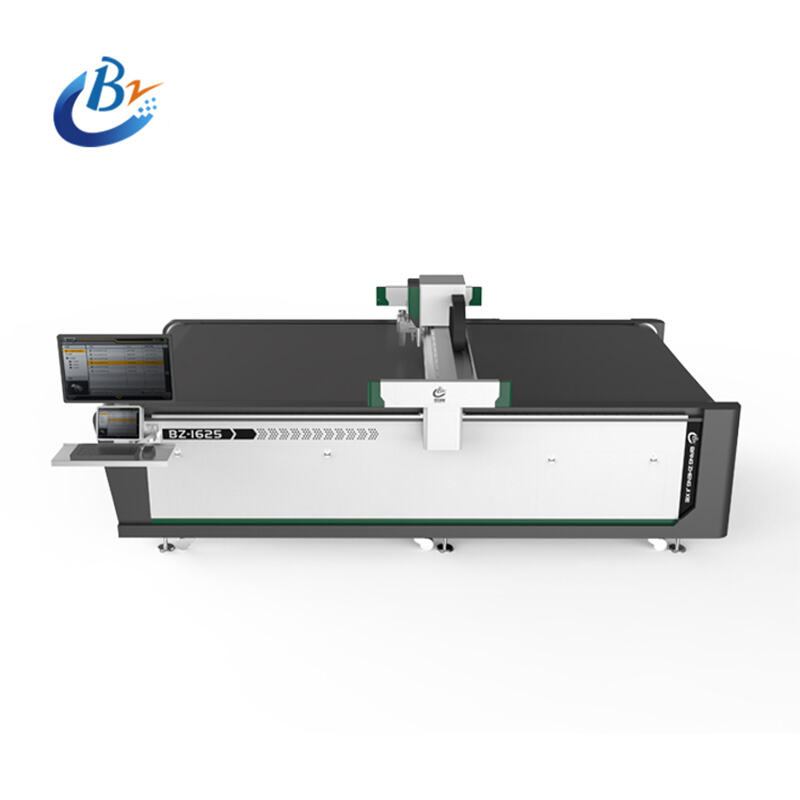
In today's competitive textile and garment manufacturing landscape, production efficiency and precision directly impact profitability and market responsiveness. Manufacturing operations handling large volumes of fabric daily face persistent challenges: inconsistent cutting quality, excessive material waste, labor bottlenecks, and the struggle to maintain output consistency across multiple shifts. These operational constraints become particularly acute when production demands surge or when working with expensive specialty fabrics where every centimeter counts. An auto fabric cutter with multilayer capacity addresses these exact pain points by combining automation, precision engineering, and high-throughput design to transform cutting room economics and production capability fundamentally.
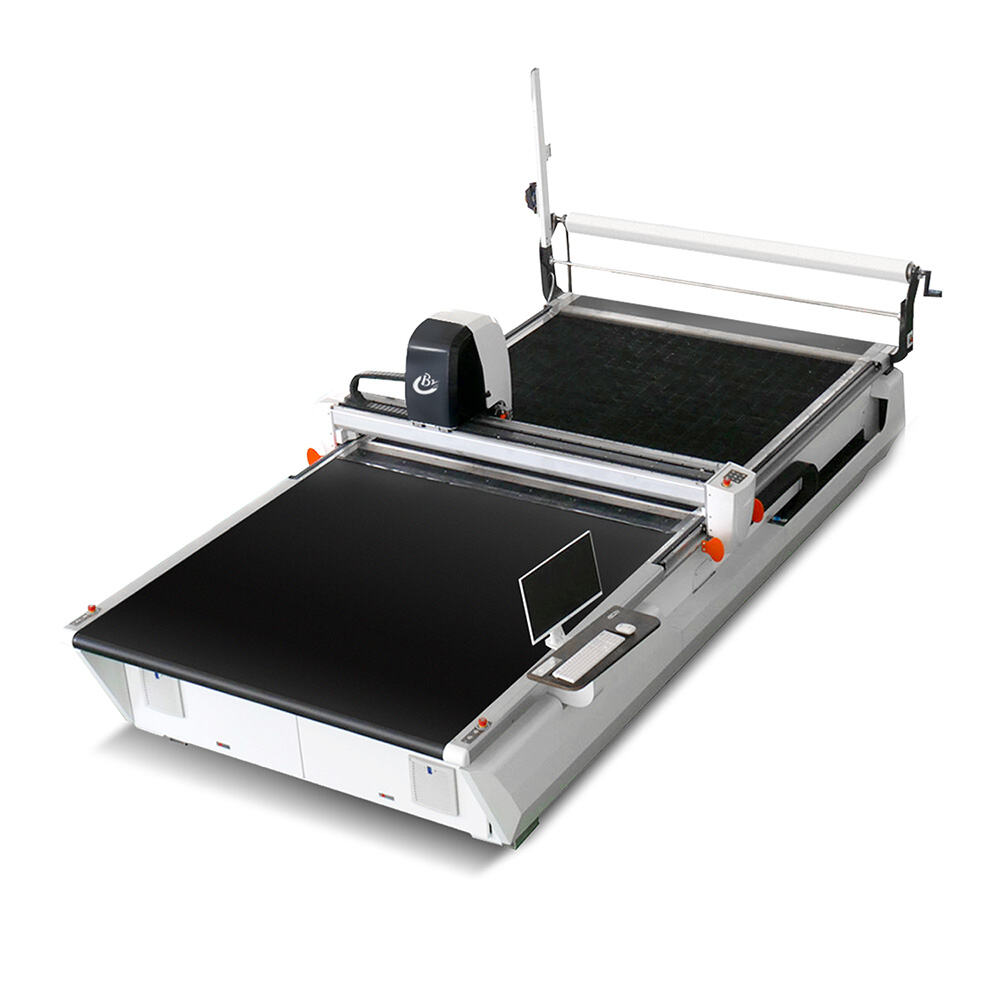
The question of what makes an auto fabric cutter ideal for mass production environments extends beyond simple throughput numbers. It encompasses material handling capabilities, cutting precision across fabric stacks, operational consistency during extended production runs, integration with digital workflow systems, and the economic return on capital investment. Manufacturing decision-makers evaluating cutting technology must understand how multilayer capacity specifically enables mass production advantages that single-layer or manual systems cannot deliver. This article examines the technical features, operational benefits, and strategic value that position multilayer auto fabric cutters as essential infrastructure for high-volume textile manufacturing operations.
Operational Efficiency Drivers in High-Volume Fabric Cutting
Throughput Multiplication Through Multilayer Processing
The fundamental advantage of an auto fabric cutter with multilayer capacity lies in its ability to process multiple fabric layers simultaneously in a single cutting operation. Unlike traditional single-layer cutting methods that require repeated passes for each piece, multilayer systems can stack dozens of fabric layers and cut through the entire stack in one automated sequence. This capability transforms production mathematics dramatically. A system capable of cutting forty fabric layers simultaneously delivers forty times the output of single-layer cutting in the same timeframe, assuming comparable cutting speeds. For mass production environments processing thousands of garment pieces daily, this multiplication effect directly translates to reduced lead times, faster order fulfillment, and increased production capacity without proportional increases in floor space or labor costs.
The throughput advantage extends beyond simple layer multiplication. An auto fabric cutter eliminates the manual handling time between cutting operations that characterizes traditional methods. Operators no longer need to manually position, mark, and cut each fabric piece individually. Instead, the automated system receives digital cutting patterns, positions the cutting head with precision servo control, and executes complex cutting paths continuously without operator intervention for pattern execution. This automation removes human pacing limitations from the cutting process, allowing production to continue at machine speed rather than operator speed. The cumulative time savings across hundreds of cutting operations per shift creates substantial capacity expansion from existing equipment investments.
Consistency and Quality Maintenance Across Production Batches
Mass production success depends critically on maintaining consistent output quality across large production batches and multiple production shifts. Manual cutting operations introduce inherent variability as operator fatigue, skill differences, and attention fluctuations affect cutting precision throughout the day. An auto fabric cutter eliminates this human variability factor by executing every cutting operation with identical precision regardless of production duration or shift changes. The system follows digitally programmed cutting paths with servo-controlled accuracy measured in fractions of a millimeter, ensuring that the thousandth piece cut matches the first piece exactly. This consistency proves particularly valuable when producing garments requiring precise fit specifications or when working with patterned fabrics where alignment errors become immediately visible in finished products.
The multilayer capacity of advanced auto fabric cutter systems introduces additional consistency benefits by cutting all layers in a stack simultaneously using the same cutting path. This approach guarantees that every piece within a single cutting operation maintains identical dimensions and edge quality, eliminating the dimensional drift that can occur when cutting pieces sequentially. For manufacturers producing multiple sizes or color variants within a single production run, this consistent cutting across layers ensures that assembly operations receive uniformly dimensioned components that fit together properly without adjustment or rework. The resulting reduction in assembly time and defect rates contributes substantially to overall production efficiency and quality metrics.
Labor Optimization and Workforce Deployment Flexibility
The automation inherent in an auto fabric cutter fundamentally changes labor requirements in cutting room operations. Traditional manual cutting demands skilled operators who can accurately follow patterns, maintain consistent blade angles, and manage fatigue during repetitive cutting motions. These specialized skills require training time and command premium wages in tight labor markets. Automated cutting systems reduce the skill barrier for cutting operations while simultaneously freeing skilled workers for higher-value tasks. A single operator can often supervise multiple auto fabric cutter machines simultaneously, focusing on material loading, quality verification, and exception handling rather than performing repetitive cutting motions. This workforce leverage effect allows manufacturers to expand production capacity without proportional increases in direct labor headcount.
The reduced dependence on specialized cutting skills also provides workforce deployment flexibility during production peaks or labor shortages. When an auto fabric cutter handles the precision cutting execution, operators need only master material handling and basic machine operation rather than developing years of manual cutting expertise. This lower skill threshold enables faster training of temporary workers during seasonal peaks and reduces vulnerability to key employee turnover. Additionally, the physical demands of operating an auto fabric cutter are substantially lower than manual cutting, reducing worker fatigue and associated injury risks while enabling longer productive shifts when production demands require extended operations.
Technical Capabilities Enabling Mass Production Performance
Precision Control Systems and Cutting Path Optimization
The precision control systems within modern auto fabric cutter equipment represent sophisticated engineering that enables reliable mass production performance. Advanced servo motor systems control cutting head positioning with resolution measured in tenths of millimeters, ensuring that complex cutting paths are executed with accuracy that manual operations cannot match. These control systems continuously monitor cutting head position, velocity, and acceleration, making real-time adjustments to maintain cutting quality even during high-speed operation. The precision extends to cutting pressure control, where sensors adjust blade force based on fabric stack height and material characteristics, preventing compression deformation in lower layers while ensuring complete cutting through the entire stack. This intelligent control system adaptation maintains cutting quality consistency across different fabric types and stack configurations without requiring manual machine adjustments.
Cutting path optimization algorithms further enhance the mass production efficiency of an auto fabric cutter by minimizing non-productive motion and maximizing cutting speed. The system analyzes digital cutting patterns and calculates the most efficient sequence of cutting operations, reducing the total distance the cutting head must travel and minimizing direction changes that require deceleration and acceleration. This optimization reduces total cutting time per batch while also extending blade life by minimizing unnecessary cutting operations. Advanced systems incorporate nesting algorithms that arrange pattern pieces on fabric spreads to minimize material waste, automatically calculating optimal placement that balances material utilization against cutting efficiency. These digital optimization capabilities deliver material savings and throughput improvements that compound across thousands of cutting operations to generate substantial operational advantages.
Material Handling and Layer Management Technology
Effective multilayer cutting requires sophisticated material handling technology to manage fabric stacks reliably throughout the cutting process. An auto fabric cutter designed for mass production incorporates automated spreading systems that lay fabric layers with controlled tension and alignment, ensuring that all layers remain properly positioned throughout cutting. Vacuum hold-down systems secure the fabric stack to the cutting table, preventing layer shifting during cutting that would cause dimensional errors or incomplete cuts in lower layers. The vacuum system strength must be calibrated carefully to secure lightweight fabrics without causing deformation while providing sufficient holding force for heavy materials like denim or canvas. Advanced systems incorporate zone-controlled vacuum that applies holding force only in areas surrounding the current cutting location, reducing power consumption while maintaining cutting precision.
Layer separation and piece extraction technology integrated into sophisticated auto fabric cutter systems further streamlines the post-cutting workflow. After cutting completion, operators must separate individual pieces from the stack and prepare them for subsequent production operations. Systems with automated layer separation capabilities use controlled air jets or mechanical separators to lift and separate cut pieces, reducing the manual handling time required for piece extraction. This integration extends the efficiency advantages of automated cutting into the material handling domain, eliminating bottlenecks that can negate cutting speed improvements if downstream operations cannot keep pace with increased cutting throughput. The combination of cutting automation with intelligent material handling creates a comprehensive solution that optimizes the entire cutting room workflow rather than addressing only the cutting operation in isolation.
Integration with Digital Design and Production Management Systems
Modern mass production environments increasingly rely on digital workflow integration to coordinate design, planning, and manufacturing operations. An auto fabric cutter designed for contemporary manufacturing integrates seamlessly with computer-aided design systems, receiving cutting patterns directly from digital design files without manual pattern preparation. This digital integration eliminates pattern transfer errors and reduces the time between design finalization and production start, enabling faster response to design changes or custom orders. The cutting system communicates with production management software, reporting completion status, material consumption, and performance metrics in real time. This data visibility enables production managers to monitor cutting operations remotely, identify bottlenecks as they develop, and make informed decisions about production scheduling and resource allocation.
The digital connectivity of advanced auto fabric cutter systems also enables predictive maintenance capabilities that minimize unplanned downtime in mass production operations. The system monitors component performance indicators such as blade wear, motor temperature, and servo system response times, using this operational data to predict when maintenance will be required before failures occur. This predictive approach allows maintenance to be scheduled during planned downtime rather than interrupting production unexpectedly. For high-volume operations where equipment downtime directly impacts delivery commitments, this reliability improvement represents significant operational value. The combination of digital workflow integration with intelligent system monitoring creates a cutting solution that functions as an integrated component of a smart manufacturing environment rather than an isolated piece of equipment.
Economic Value Creation in Mass Production Contexts
Material Utilization Optimization and Waste Reduction
In mass production environments processing substantial fabric volumes, even small improvements in material utilization translate to significant cost savings. An auto fabric cutter with advanced nesting algorithms optimizes pattern placement to maximize the number of pieces cut from each fabric spread, minimizing the remnant material that cannot be used. Compared to manual pattern placement where operators work from experience and intuition, digital optimization can typically improve material utilization by three to five percent. For a manufacturer processing hundreds of thousands of dollars in fabric monthly, this utilization improvement generates tens of thousands in material cost savings annually. The precision cutting capability of automated systems also reduces the need for generous cutting allowances that manual operations require to ensure adequate seam margins, further improving material efficiency.
The consistent cutting precision delivered by an auto fabric cutter also reduces downstream waste from defective assembly or poor garment fit. When components arrive at assembly stations with consistent dimensions and clean edges, sewers experience fewer fit problems, reducing the time spent on adjustments and the defect rate of finished garments. This quality improvement reduces the proportion of production that requires rework or must be scrapped as unsaleable, improving the overall yield of saleable products from material inputs. For mass production operations where margins are often compressed by competitive pressure, these waste reductions contribute directly to profitability. The combination of improved material utilization, reduced cutting waste, and lower assembly defects creates a comprehensive economic advantage that justifies the capital investment in automated cutting technology.
Production Scalability and Capital Efficiency
The throughput multiplication enabled by multilayer auto fabric cutter technology provides production scalability advantages that manual cutting cannot match. When production demands increase, manufacturers face the choice of adding more manual cutting stations with associated labor, floor space, and supervision costs, or increasing the capacity utilization of existing automated equipment. An auto fabric cutter operating at partial capacity can often absorb production increases through extended operating hours or optimized scheduling without additional equipment investment. The high output per machine also means that manufacturers need fewer cutting machines to achieve target production volumes, reducing the floor space dedicated to cutting operations and lowering the capital invested in cutting equipment. This capital efficiency becomes particularly valuable for manufacturers operating in high-cost real estate markets where floor space represents a significant operating expense.
The scalability advantage extends to product mix flexibility in mass production environments. Traditional high-volume manufacturing often struggles with frequent product changes because manual cutting operations require time-consuming pattern changes and operator retraining. An auto fabric cutter receives new cutting patterns digitally and can switch between different product designs with minimal changeover time, often just the time required to load new material. This flexibility enables manufacturers to economically produce smaller batch sizes and greater product variety without sacrificing the efficiency advantages of mass production. The ability to serve both high-volume standard products and customized shorter runs from the same equipment creates strategic flexibility that supports diverse business models and market opportunities.
Return on Investment Timeline and Operational Breakeven Analysis
The decision to invest in an auto fabric cutter requires careful analysis of capital costs against operational savings and productivity improvements. The initial investment typically ranges from tens of thousands to several hundred thousand dollars depending on system size, capability, and automation level. This capital requirement must be justified through quantifiable operational improvements that deliver financial returns within acceptable payback periods. The primary return drivers include labor cost reduction from decreased operator requirements, material savings from improved utilization and reduced waste, throughput increases that enable revenue growth without proportional cost increases, and quality improvements that reduce rework and defects. Most mass production operations can achieve payback periods of eighteen to thirty-six months when these factors are comprehensively analyzed, with higher-volume operations achieving faster returns due to greater absolute savings from efficiency improvements.
The return calculation should also incorporate less tangible but nonetheless valuable benefits such as improved delivery reliability from increased capacity, enhanced ability to accept rush orders that command premium pricing, and reduced vulnerability to labor market fluctuations. For manufacturers competing on delivery speed and reliability rather than purely on price, these competitive advantages may justify investment even when purely financial payback extends beyond typical capital approval thresholds. The long service life of quality auto fabric cutter systems, often exceeding ten years with proper maintenance, means that the equipment continues delivering operational benefits long after the initial investment has been recovered. This extended value creation period amplifies the total return on investment and supports the strategic value of automated cutting technology in competitive manufacturing environments.
Operational Implementation Considerations for Maximum Value Realization
Workflow Integration and Upstream Process Optimization
Realizing the full potential of an auto fabric cutter requires careful attention to workflow integration with upstream and downstream production processes. The cutting operation exists within a larger production system that includes fabric receiving and inspection, spreading, cutting, piece separation and bundling, and transfer to assembly operations. If any of these adjacent processes create bottlenecks, the increased cutting throughput will not translate to proportional production increases. Successful implementation requires analyzing the entire workflow to ensure that material handling, quality control, and transfer processes can support the volume that automated cutting enables. This may require investing in complementary equipment such as automated spreading systems, conveyor systems for cut piece transfer, or enhanced quality inspection capabilities to maintain production flow balance.
The transition from manual to automated cutting also requires process standardization and documentation that may not exist in operations relying on operator experience and informal practices. An auto fabric cutter operates from explicit digital instructions, requiring that cutting specifications, material parameters, and quality standards be formally defined and documented. This standardization effort, while requiring upfront investment, creates valuable process knowledge assets that improve operational consistency and facilitate training. The digital nature of automated cutting also enables process improvement through data analysis, identifying patterns in cutting performance, material utilization, and quality metrics that inform continuous improvement initiatives. Organizations that approach automated cutting implementation as a comprehensive workflow transformation rather than simple equipment replacement achieve substantially greater value from their technology investments.
Operator Training and Skill Development Requirements
Successful operation of an auto fabric cutter requires developing operator skills that differ substantially from traditional manual cutting expertise. Operators must understand basic computer operation to interact with the cutting system interface, interpret digital cutting patterns, and respond to system messages and alerts. They need practical knowledge of material handling best practices to prepare fabric stacks properly, load materials correctly, and extract cut pieces without damage. Troubleshooting skills become important as operators must recognize when cutting quality deviates from specifications and take appropriate corrective action. While these skills differ from manual cutting expertise, they are generally easier to develop through focused training programs, enabling faster operator development than traditional apprenticeship approaches required for manual cutting mastery.
Training programs for auto fabric cutter operation should address both technical machine operation and the underlying principles of proper cutting practice. Operators who understand why proper material tension matters or how fabric characteristics affect cutting parameters can make better decisions when addressing quality issues or working with unfamiliar materials. Comprehensive training should include hands-on practice with the specific equipment being used, exposure to common problems and their solutions, and clear documentation of standard operating procedures. Organizations that invest in thorough operator training and ongoing skill development realize better equipment utilization, fewer quality problems, and lower maintenance costs than those treating training as a minimal compliance exercise. The relatively modest investment in training delivers substantial returns through improved operational performance and reduced learning-curve losses during implementation.
Maintenance Programs and Operational Reliability Management
The demanding duty cycle of mass production environments places substantial stress on auto fabric cutter components, making systematic maintenance essential for sustaining operational reliability. Critical maintenance areas include cutting blade inspection and replacement, servo motor and drive system maintenance, vacuum system filter cleaning and pump service, and control system software updates. Establishing a preventive maintenance schedule based on manufacturer recommendations and operational experience prevents unexpected failures that disrupt production schedules. Many system failures in automated equipment result from deferred maintenance rather than inherent design limitations, making maintenance discipline a key factor in achieving target equipment availability. Organizations should track maintenance costs and downtime carefully to identify recurring problems that may justify component upgrades or operational adjustments.
Advanced auto fabric cutter systems with integrated monitoring capabilities enable condition-based maintenance approaches that optimize maintenance timing based on actual component condition rather than fixed time intervals. These systems monitor operational parameters such as cutting force, motion smoothness, and system response times, using deviations from normal patterns to identify developing problems before they cause failures. This intelligent monitoring approach reduces both maintenance costs by avoiding unnecessary preventive service and downtime by catching problems early. For mass production operations where equipment availability directly impacts revenue generation, the reliability improvements from systematic maintenance and condition monitoring justify the administrative effort and modest cost involved. Equipment that consistently performs at specification enables more accurate production planning and delivery commitments, creating competitive advantages that extend beyond direct operational efficiency.
FAQ
How does multilayer cutting capacity specifically benefit mass production compared to single-layer systems?
Multilayer cutting capacity enables an auto fabric cutter to process multiple fabric layers simultaneously in a single cutting operation, delivering throughput multiplication that directly addresses mass production volume requirements. A system cutting forty layers at once produces forty times the output of single-layer cutting in the same timeframe, dramatically reducing the time required to cut large production batches. This capacity multiplication allows manufacturers to meet high-volume production targets with fewer machines and less floor space while maintaining consistent cutting quality across all layers in the stack. The efficiency advantage becomes particularly significant in garment manufacturing where production runs often involve hundreds or thousands of identical pieces that benefit from simultaneous cutting of multiple layers.
What fabric types and thickness ranges can auto fabric cutters with multilayer capacity handle effectively?
Modern auto fabric cutter systems designed for mass production can handle diverse fabric types ranging from lightweight synthetics and knits to heavy materials like denim, canvas, and upholstery fabrics. The specific thickness capacity varies by machine design, with industrial systems typically handling total stack heights from fifty millimeters to over one hundred millimeters depending on material density and compressibility. The actual number of layers that can be cut simultaneously depends on individual fabric thickness, with lightweight materials allowing stacks of one hundred or more layers while heavy fabrics may be limited to twenty or thirty layers. Advanced systems incorporate automatic cutting parameter adjustment based on material characteristics, optimizing cutting speed, blade pressure, and motion profiles to maintain quality across different fabric types without manual reconfiguration.
What is the realistic payback period for investing in an auto fabric cutter in a mass production environment?
Payback periods for auto fabric cutter investments in mass production operations typically range from eighteen to thirty-six months depending on production volume, labor costs, material expenses, and current operational efficiency. Higher-volume operations processing greater material quantities achieve faster payback through larger absolute savings from labor reduction, material utilization improvement, and throughput increases. The calculation should include direct labor cost savings from reduced operator requirements, material cost savings from improved utilization and waste reduction, quality improvement benefits from reduced defects and rework, and capacity expansion value from increased throughput. Organizations with expensive labor markets, high material costs, or tight capacity constraints generally achieve faster returns than those with lower cost structures or excess capacity in existing manual operations.
Can an auto fabric cutter handle frequent product changes and small batch production effectively?
An auto fabric cutter excels at handling frequent product changes because it receives cutting patterns digitally and can switch between different designs with minimal changeover time, typically just the time required to load new material and select the appropriate cutting program. This flexibility makes automated cutting surprisingly effective for small batch production and high product variety scenarios, not just long production runs of identical products. The system eliminates the pattern preparation and operator retraining time that manual cutting requires for product changes, enabling economical production of smaller batches that would be inefficient with traditional methods. This capability allows mass production operations to serve both high-volume standard products and customized or limited-run items from the same equipment, providing strategic flexibility that supports diverse customer requirements and market opportunities.
Table of Contents
- Operational Efficiency Drivers in High-Volume Fabric Cutting
- Technical Capabilities Enabling Mass Production Performance
- Economic Value Creation in Mass Production Contexts
- Operational Implementation Considerations for Maximum Value Realization
-
FAQ
- How does multilayer cutting capacity specifically benefit mass production compared to single-layer systems?
- What fabric types and thickness ranges can auto fabric cutters with multilayer capacity handle effectively?
- What is the realistic payback period for investing in an auto fabric cutter in a mass production environment?
- Can an auto fabric cutter handle frequent product changes and small batch production effectively?