
 EN
EN



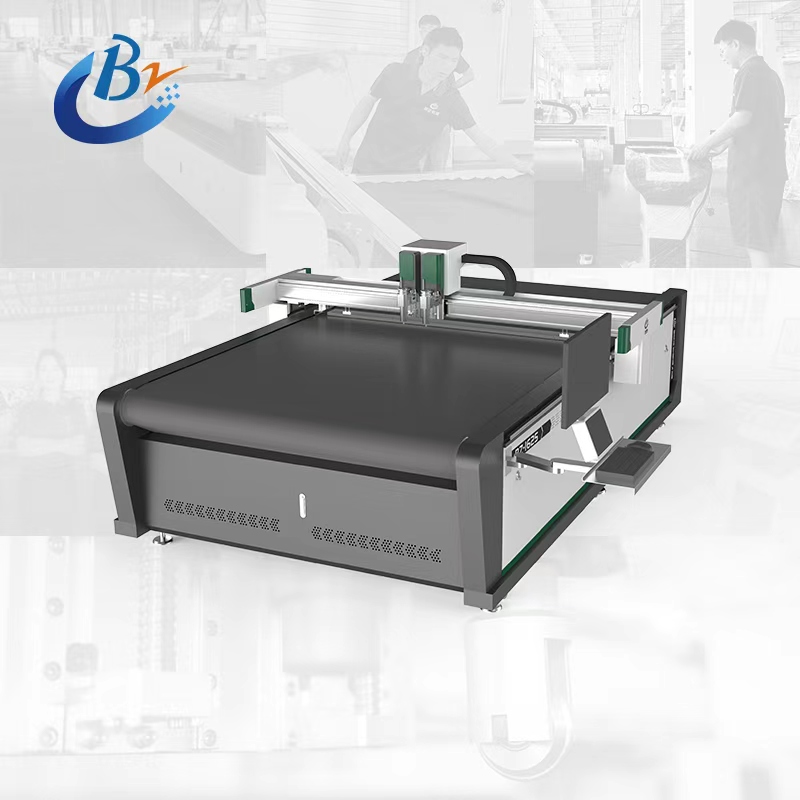
Home textile manufacturers operating at scale face mounting pressure to balance production speed, quality consistency, and labor costs. A curtain cutting machine represents a transformative investment that directly addresses these challenges by automating one of the most labor-intensive steps in fabric processing. For manufacturers producing large volumes of curtains, drapes, and related textile products, manual cutting operations consume substantial time, introduce human error, and strain workforce resources. Investing in an automated curtain cutting machine fundamentally changes the operational equation, enabling manufacturers to meet aggressive delivery timelines while maintaining precision tolerances that manual methods cannot reliably achieve.
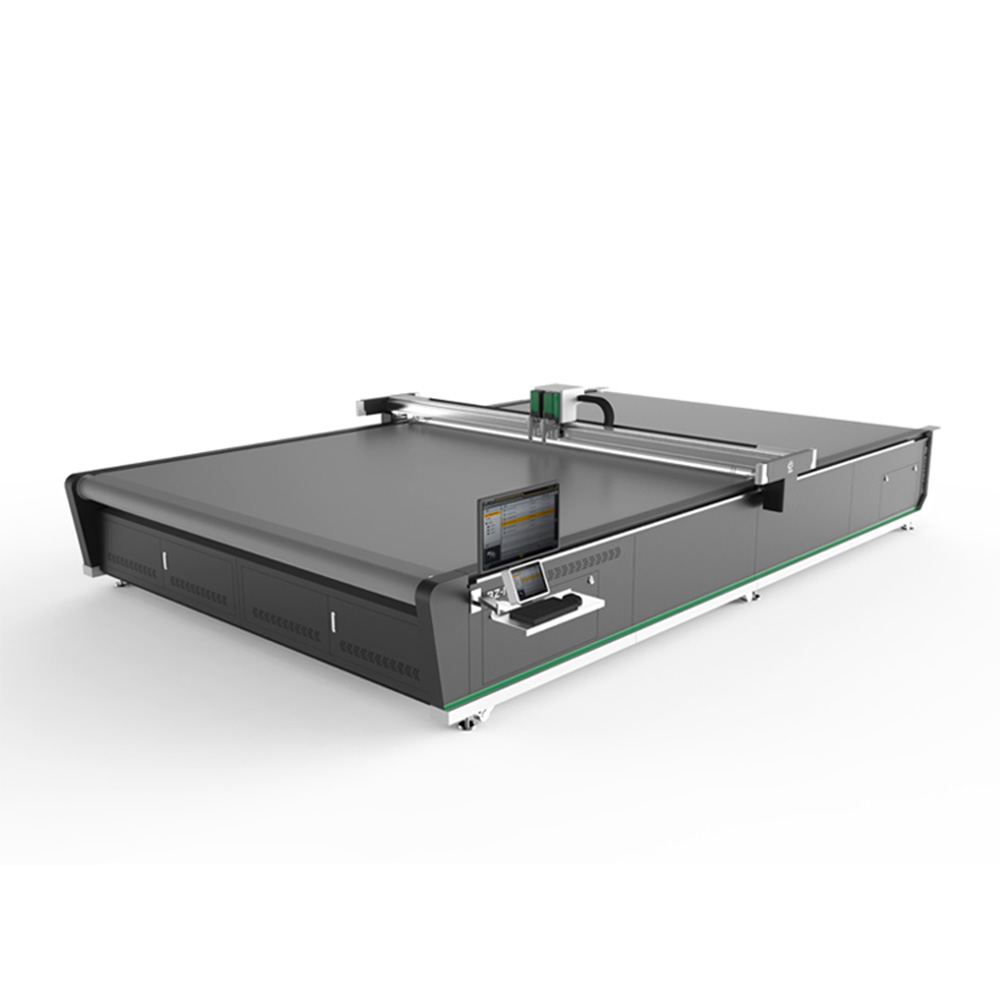
The decision to implement a curtain cutting machine goes beyond simple automation; it reflects a strategic commitment to operational excellence in high-volume manufacturing environments. When production volumes exceed hundreds or thousands of units monthly, the efficiency gains from an automated curtain cutting machine compound rapidly, creating competitive advantages in both delivery performance and cost structure. Manufacturers who deploy these systems early typically capture market share from competitors still relying on manual processes, while simultaneously improving their profit margins through labor optimization and material waste reduction.
Production Efficiency and Speed Advantages
Eliminating Manual Cutting Bottlenecks
High-volume curtain production in traditional settings relies on skilled workers using industrial scissors, manual straight knives, or handheld rotary cutters. Each method is inherently slow, limited by human capability and stamina. A curtain cutting machine removes this bottleneck entirely by processing fabric continuously at speeds that human operators cannot match. For a manufacturer cutting fabric for five hundred curtain panels daily, manual operations might consume eight to ten labor-hours per shift. An automated curtain cutting machine can process the same volume in two to three hours, freeing workforce capacity for other value-adding activities.
Consistent Batch Processing Timelines
Production scheduling becomes far more predictable when a curtain cutting machine handles all cutting operations. Unlike human workers who experience fatigue, take breaks, and vary in cutting speed based on individual skill levels, an automated curtain cutting machine maintains consistent throughput hour after hour. Manufacturers can reliably calculate cutting time for any order size, improve on-time delivery performance, and build customer confidence through predictable lead times. This consistency is especially valuable when serving bulk orders for hospitality chains, office building projects, or retail chains where delivery dates are contractually binding.
Precision, Consistency, and Quality Control
Eliminating Human Error in Measurements
Cutting accuracy directly impacts final product quality and customer satisfaction. Manual curtain cutting, even when performed by experienced workers, introduces dimensional variation across production batches. A curtain cutting machine operates with laser-guided or CNC-programmed precision, cutting every panel to exact specifications programmed into the system. This consistency eliminates costly rework, reduces fabric waste from mismeasured cuts, and ensures that every curtain meets design specifications. For manufacturers serving premium market segments where appearance consistency matters significantly, a curtain cutting machine becomes essential to competitive positioning.
Reducing Material Waste and Fabric Loss
In manual cutting operations, inexperienced workers or rushed timelines often result in crooked cuts, oversized allowances, or mistakes that require discarding fabric panels. An optimized curtain cutting machine, programmed with intelligent nesting algorithms, minimizes layout waste by calculating the most efficient cutting patterns across available fabric widths. Waste reduction of five to fifteen percent is typical when transitioning from manual to automated cutting. For manufacturers working with expensive fabrics or specialty textiles, these material savings alone often justify the curtain cutting machine investment within two to three years of operation.
Labor Cost Reduction and Workforce Reallocation
Reducing Direct Labor Requirements
A curtain cutting machine dramatically reduces headcount requirements for cutting operations. Where a manufacturing facility previously employed four to eight full-time cutters for high-volume production, a single operator can manage the automated system while performing setup, quality checks, and material staging tasks. This labor cost reduction typically represents twenty to thirty percent savings in labor expenses for cutting-related work. For home textile manufacturers operating in regions with rising wage pressures or tight labor markets, the curtain cutting machine becomes a strategic tool for maintaining profitability as recruitment and retention costs climb.
Redirecting Skilled Workers to Higher-Value Activities
Shifting routine cutting work to a curtain cutting machine frees experienced textile professionals to focus on skilled tasks that command higher wages and greater strategic value. Quality inspection, machine maintenance, design innovation, and production coordination all benefit from having experienced staff available rather than tied up in repetitive cutting. Manufacturers often find that workforce satisfaction improves when employees transition from physically demanding, repetitive cutting work to more engaging roles involving problem-solving and technical responsibility. This reallocation of talent strengthens overall operational capability while improving employee retention in a competitive labor market.
Investment Return and Business Scalability
Calculating Payback Periods and Return on Investment
The financial case for a curtain cutting machine strengthens significantly in high-volume environments. Assuming a cutting machine costs between thirty thousand and seventy thousand dollars depending on technical specifications, and a manufacturer produces at least one hundred thousand linear meters of cut fabric annually, typical payback periods range from twelve to twenty-four months. Beyond the payback period, the curtain cutting machine generates pure operational profit through labor savings and waste reduction. Manufacturers scaling from five hundred to two thousand curtain units monthly typically see payback within eighteen months, making the investment highly attractive from a capital efficiency standpoint.
Enabling Production Growth Without Proportional Labor Increases
Growth in textile manufacturing traditionally required proportional increases in workforce, facility space, and management complexity. A curtain cutting machine breaks this linear relationship by allowing production volume to increase substantially without hiring additional cutting staff. A manufacturer capable of producing two thousand curtain units monthly with manual cutting might scale to four thousand units monthly using a curtain cutting machine, without adding a single cutter to payroll. This scalability advantage allows manufacturers to pursue larger orders and market share expansion with improved unit economics, creating competitive pricing flexibility without sacrificing profitability.
FAQ
What types of fabrics can an automated curtain cutting machine handle?
Modern automated curtain cutting machines accommodate a wide range of textile materials including cotton, polyester, linen blends, jacquard fabrics, and specialty weaves. The cutting mechanism adjusts based on fabric weight and weave density, ensuring clean cuts on delicate sheers and heavier drapery materials alike. A curtain cutting machine equipped with programmable cutting pressure and speed settings can process virtually any fabric type used in home textile production, making equipment investment valuable across diverse product portfolios.
How does a curtain cutting machine integrate with existing production workflows?
Integration of a curtain cutting machine into existing operations typically requires minimal workflow disruption. The system receives fabric rolls or bolts from existing spreading and marking processes, performs automated cutting according to programmed patterns, and outputs finished cut panels for downstream sewing and finishing operations. A curtain cutting machine can be positioned to accept inputs from manual or automated spreading equipment, adapting to existing facility layouts without requiring complete production line restructuring. Most manufacturers achieve full integration within two to four weeks of equipment installation and operator training.
What maintenance and operator training does a curtain cutting machine require?
Automated curtain cutting machines require routine maintenance including blade sharpening or replacement, lubrication of moving parts, and calibration checks to maintain cutting precision. Most equipment suppliers provide comprehensive operator training during installation, covering setup, programming, safety protocols, and basic troubleshooting. Regular maintenance, typically performed quarterly or biannually depending on usage intensity, keeps a curtain cutting machine operating at peak efficiency. Operators benefit from straightforward training programs focused on loading materials, entering cutting specifications, and monitoring system performance, making the skill barriers to operation minimal compared to traditional textile craftsmanship.