
 EN



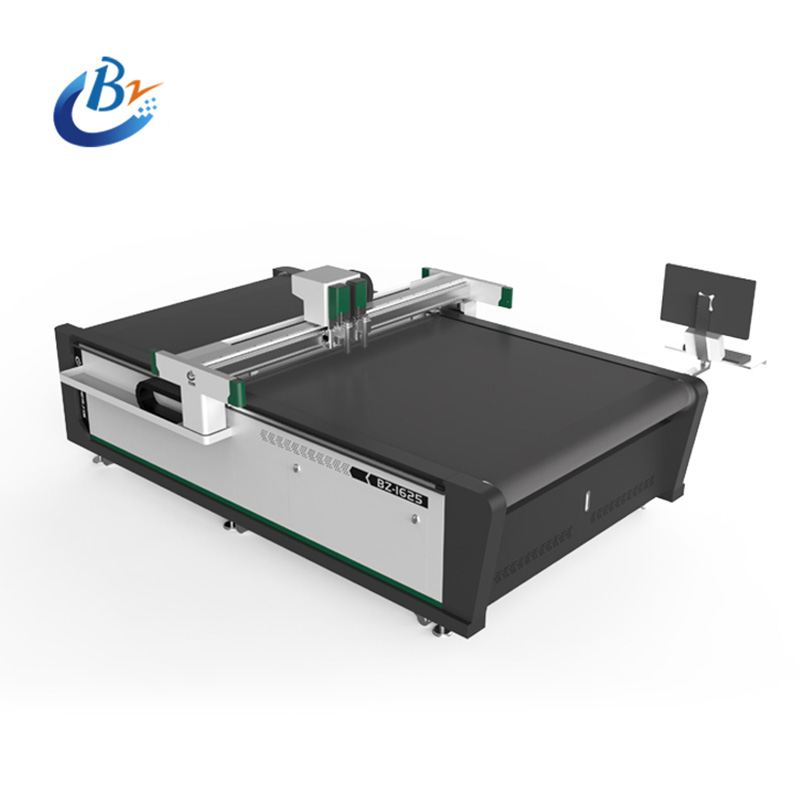
A cnc knife cutting machine equipped with drag knife technology has become the preferred solution for industries requiring precision cuts through delicate materials like thin films and vinyl. Unlike traditional cutting methods that rely on rotating blades or laser systems, a cnc knife cutting machine with drag knife capability delivers superior control, material handling, and cost efficiency. This specialized approach to material processing makes a cnc knife cutting machine an essential investment for manufacturers working with sensitive substrates that demand accuracy without thermal damage or edge degradation.

The suitability of a cnc knife cutting machine for thin films and vinyl stems from its unique mechanical design and operational characteristics. A cnc knife cutting machine uses a tangential cutting head that adjusts angle and pressure dynamically, responding in real-time to material thickness and density variations. This adaptive cutting method ensures consistent edge quality, eliminates material distortion, and prevents the thermal stress that laser or heated cutting systems introduce. For industries handling polyvinyl chloride, polyethylene films, polyester substrates, or specialized coating layers, a cnc knife cutting machine provides unmatched reliability and repeatability.
How Drag Knife Technology Enhances Cutting Precision
Adaptive Blade Angle and Pressure Control
The drag knife mechanism integrated into a cnc knife cutting machine operates differently from fixed-blade systems. As the cutting head moves across the material surface, the blade angle shifts automatically to match the material's resistance and thickness profile. A cnc knife cutting machine with this capability senses material properties continuously, adjusting pressure and blade angle to maintain optimal cutting conditions throughout the entire stroke. This responsiveness prevents blade bounce, material chatter, and edge fraying—common problems when cutting thin films with stationary cutting tools.
Elimination of Thermal Damage and Material Deformation
Thin films and vinyl materials are highly sensitive to heat and mechanical stress. A cnc knife cutting machine solves this challenge by using a mechanical cutting action rather than thermal energy. Since a cnc knife cutting machine cuts through shearing motion alone, vinyl doesn't melt, films don't warp, and coated surfaces remain undamaged. This cold-cutting approach preserves material integrity, maintains dimensional accuracy, and protects specialized coatings or adhesive layers on composite materials. Manufacturers processing sensitive vinyl graphics, protective films, or laminated sheets rely on a cnc knife cutting machine precisely because it avoids the thermal limitations of alternative cutting technologies.
Why Thin Films and Vinyl Require Specialized Cutting Solutions
Material Characteristics Demanding Precision Equipment
Thin films and vinyl materials exhibit properties that make standard cutting methods inadequate. A cnc knife cutting machine addresses these unique demands by accommodating materials ranging from 0.1mm to several millimeters thick without requiring tool changes. Vinyl, particularly PVC-based products, can easily tear or shrink under incorrect cutting pressure. A cnc knife cutting machine adjusts to each material's natural resistance, preventing tears while maintaining clean, professional edges suitable for applications like vehicle wraps, wall decals, protective layers, and industrial gaskets. The precision of a cnc knife cutting machine ensures every cut meets exact specifications, reducing scrap and rework costs.
Production Speed and Efficiency Gains
Production efficiency directly impacts profitability in material conversion industries. A cnc knife cutting machine accelerates output by eliminating the need for multiple setups, tool changes, or post-cut finishing operations. The drag knife system on a cnc knife cutting machine operates at speeds up to 150mm per second, processing large sheets or rolls continuously without material degradation. Additionally, a cnc knife cutting machine minimizes material waste through optimized nesting algorithms that arrange complex shapes to maximize yield from each sheet or roll. For companies running high-volume thin film or vinyl operations, investing in a cnc knife cutting machine delivers rapid payback through reduced labor, waste, and production time.
Industrial Applications Where CNC Knife Cutting Excels
Automotive and Vehicle Graphics
The automotive aftermarket depends heavily on precision-cut vinyl graphics, protective films, and trim components. A cnc knife cutting machine produces vinyl window decals, racing stripes, protective film kits, and custom graphics with the edge quality required for professional installation. A cnc knife cutting machine handles complex curves, sharp angles, and intricate lettering that would be impossible to achieve with manual cutting tools. Vehicle protection films, ceramic-coated materials, and reflective vinyl all benefit from the controlled, non-damaging approach of a cnc knife cutting machine.
Medical and Pharmaceutical Packaging
Medical device packaging and pharmaceutical labeling require absolute precision and contamination control. A cnc knife cutting machine cuts thin polymer films used in sterile packaging, drug delivery systems, and diagnostic device housings without introducing particles or compromising material properties. A cnc knife cutting machine meets stringent medical manufacturing standards by providing repeatable, clean cuts that prevent delamination or contamination risk. The non-contact approach of a cnc knife cutting machine eliminates cross-contamination between materials, making it ideal for cleanroom manufacturing environments.
Sign and Display Production
Sign shops and display manufacturers process diverse materials daily, from vinyl films to adhesive-backed substrates. A cnc knife cutting machine enables rapid turnaround on custom projects, complex patterns, and multi-layer constructions. A cnc knife cutting machine cuts through sandblast resist materials, printable vinyl, and specialty films consistently, allowing shops to quote tight deadlines and maintain competitive pricing. The versatility of a cnc knife cutting machine means operators handle both thin window clings and thick foam boards with the same equipment through simple parameter adjustments.
FAQ
Can a CNC knife cutting machine cut materials thinner than 0.1 millimeters?
Yes, advanced cnc knife cutting machine models can cut materials as thin as 0.05 millimeters, though optimal performance typically ranges from 0.1 to 5 millimeters. Ultra-thin material cutting requires specialized blade types and reduced pressure settings calibrated through the cnc knife cutting machine's software. For exceptionally delicate films, operators should consult equipment specifications and conduct test runs to verify compatibility before full production deployment.
What is the difference between a drag knife and a rotary blade in a CNC knife cutting machine?
A drag knife on a cnc knife cutting machine features a single blade that adjusts its angle dynamically as the cutting head moves, while a rotary blade spins continuously. The cnc knife cutting machine with drag knife technology provides superior edge quality on thin films and vinyl because the blade angle adapts to material resistance in real-time. Rotary blade systems, by contrast, apply constant pressure regardless of material properties, leading to edge damage on delicate substrates. The cnc knife cutting machine drag knife approach prevents material distortion, tearing, and thermal stress.
How often do drag knife blades require replacement on a CNC knife cutting machine?
Drag knife blade lifespan on a cnc knife cutting machine depends on material hardness, cutting speed, and maintenance practices. Typical blade life ranges from 40 to 80 production hours on standard vinyl and film materials. A cnc knife cutting machine equipped with automatic blade pressure compensation and proper coolant application extends blade longevity significantly. Regular blade inspection and timely replacement prevent edge degradation that compromises cut quality, so operators should establish replacement schedules based on their specific production volume and material types.