
 EN




Thick composite materials present unique challenges in manufacturing and fabrication environments. When precision, speed, and repeatability matter most, a CNC knife cutting machine becomes an essential tool for operations that demand consistent quality across high-volume production runs. Understanding what makes a CNC knife cutting machine with oscillating knife technology ideal for thick composites requires examining how this equipment addresses the specific demands of composite material processing.
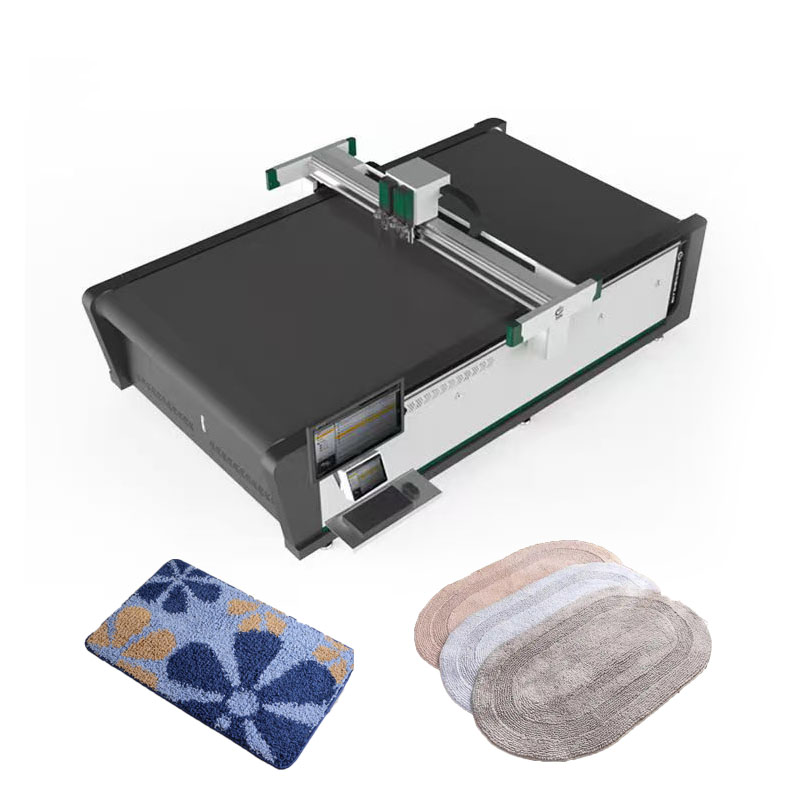
A CNC knife cutting machine equipped with oscillating knife functionality transforms how manufacturers handle thick composites by combining automated precision with dynamic blade motion. This dual capability ensures clean cuts through multi-layered materials while reducing waste and operator involvement in repetitive tasks.
The Challenge of Cutting Thick Composite Materials
Why Thick Composites Demand Specialized Equipment
Thick composite materials—whether fiberglass-reinforced polymers, carbon fiber laminates, or foam-core constructions—require cutting solutions that balance precision with cutting force. Traditional stationary blade systems often struggle with these materials because they lack the dynamic capability to handle variable material densities, fiber orientations, and adhesive layers present in thick composite stacks. A CNC knife cutting machine with oscillating blade technology solves this problem by introducing rapid blade oscillation that prevents material bounce-back and fraying while maintaining edge quality.
Material Characteristics That Favor Oscillating Blade Technology
Composite materials pose cutting challenges that differ from metals or simple plastics. The fiber reinforcement creates resistance to straight-blade cutting, while resin matrices can gum up static blades. A CNC knife cutting machine with oscillating motion addresses these issues by using rapid up-and-down blade movement to slice through fibers cleanly and prevent resin buildup on the blade surface. This oscillating action allows the CNC knife cutting machine to maintain consistent cut quality even when material thickness varies across a single workpiece.
Core Advantages of Oscillating Knife Technology in CNC Systems
Precision and Cut Quality Benefits
The oscillating knife mechanism within a CNC knife cutting machine creates superior cut edges by reducing thermal stress and minimizing delamination in composite stacks. When a CNC knife cutting machine operates with proper oscillation frequency and amplitude, it produces cleaner edges than stationary blades, reducing post-cutting finishing work and scrap rates. This precision directly translates to cost savings in downstream assembly operations where edge quality affects component fit and structural integrity.
Material Feed and Thickness Handling
A CNC knife cutting machine designed for thick composites must accommodate materials ranging from thin laminates to stacks exceeding one inch in depth. The oscillating blade technology enables a CNC knife cutting machine to apply consistent cutting pressure throughout the depth of material, ensuring that the blade remains effective from the entry point through complete penetration. This capability eliminates the need for multiple passes or specialized adapter systems, allowing a single CNC knife cutting machine to handle diverse composite specifications within a production facility.
Operational Efficiency and Automation
When manufacturers integrate a CNC knife cutting machine into their workflow, they gain significant labor and time advantages. Automated pattern recognition, tool path optimization, and consistent blade oscillation mean that a CNC knife cutting machine requires minimal operator intervention compared to manual cutting methods. The programmable nature of CNC knife cutting machine systems allows operators to store and recall cutting patterns for repeated production runs, ensuring identical results across large batch orders.
Application Scenarios Where Oscillating Blade CNC Systems Excel
Composite Layup and Pattern Cutting
In aerospace and industrial composites manufacturing, cutting accurate patterns from thick composite sheets is critical for downstream assembly. A CNC knife cutting machine programmed with precise tool paths can cut complex geometric patterns without the blade deflection that occurs with manual cutting. Whether cutting reinforcement patterns, foam cores, or adhesive-backed composite sheets, a CNC knife cutting machine with oscillating blade ensures dimensional consistency that manual cutters cannot reliably achieve. This precision minimizes scrap and rework, making a CNC knife cutting machine a value-adding investment for high-precision composite work.
Marine and Automotive Composite Components
Marine hulls, automotive body panels, and structural components often require cutting thick composite stacks to precise tolerances. A CNC knife cutting machine equipped with oscillating blade technology handles the repetitive cutting demands of production environments where thousands of identical components must be cut annually. The speed advantage of an automated CNC knife cutting machine compared to hand-cutting means manufacturers can meet delivery schedules while maintaining the edge quality necessary for proper bonding and assembly fit.
Insulation and Thermal Barrier Materials
Many thick composites serve thermal or acoustic insulation purposes, requiring clean cuts without fiber breakage that could compromise performance. A CNC knife cutting machine with oscillating capability cuts through foam cores and fiber-reinforced insulation materials without the compression and fraying common with static blade cutting. This makes a CNC knife cutting machine ideal for manufacturers producing batt insulation, pipe insulation, or specialized thermal barriers where material integrity directly affects product performance.
Key Selection Factors for CNC Knife Cutting Machine Systems
Blade Oscillation Frequency and Amplitude
The effectiveness of any CNC knife cutting machine depends heavily on its oscillation specifications. Higher oscillation frequencies—typically ranging from 500 to 2000 cycles per minute—work better for fine fibers and densely layered composites, while lower frequencies suit thicker, less dense materials. When evaluating a CNC knife cutting machine for your application, verify that oscillation settings remain adjustable, allowing your operation to optimize performance across different composite types. This flexibility ensures your CNC knife cutting machine investment remains relevant as material specifications evolve.
Cutting Area and Material Handling
The physical dimensions of your production materials directly influence CNC knife cutting machine selection. A CNC knife cutting machine must accommodate the largest composite sheets or rolls your facility processes, plus provide sufficient margin for clamping and material positioning. Consider whether your operation requires a CNC knife cutting machine with integrated material feeding systems for continuous roll-fed composites or whether a flat-bed CNC knife cutting machine better serves your intermittent production schedule.
Software Integration and Programmability
Modern CNC knife cutting machine systems must integrate seamlessly with your design and manufacturing software. A CNC knife cutting machine that accepts common CAD file formats reduces setup time and errors compared to manual pattern input. Look for a CNC knife cutting machine platform that supports multiple file types, offers intuitive pattern layout tools, and provides real-time feedback on material usage to maximize yield from each composite sheet processed.
FAQ
What exactly is oscillating knife technology in a CNC knife cutting machine?
Oscillating knife technology refers to a rapidly vibrating blade mechanism integrated into a CNC knife cutting machine that moves vertically at high frequency while the machine head travels across the material. This vertical blade motion allows the CNC knife cutting machine to cut through tough, fibrous, or layered materials more cleanly than a stationary blade, preventing material bounce-back and reducing thermal damage to composite matrices.
Can a standard CNC knife cutting machine handle thick composite materials without oscillating blade capability?
While a standard CNC knife cutting machine can cut some composite materials, thick stacks—especially those exceeding half an inch—produce inferior results without oscillating blade support. A CNC knife cutting machine lacking oscillation tends to crush or fray fiber ends, leaving edges that require secondary finishing. Investing in a CNC knife cutting machine with oscillating capability from the outset prevents quality issues and improves long-term operational efficiency.
How does blade oscillation frequency affect CNC knife cutting machine performance on different composite types?
Blade oscillation frequency in a CNC knife cutting machine directly correlates with material compatibility. A CNC knife cutting machine with adjustable oscillation allows operators to increase frequency for dense, tightly wound composites and decrease it for more open, low-density foam or batt materials. Matching oscillation settings to specific composite construction ensures a CNC knife cutting machine maintains consistent cut quality and blade life across your product range.
Table of Contents
- The Challenge of Cutting Thick Composite Materials
- Core Advantages of Oscillating Knife Technology in CNC Systems
- Application Scenarios Where Oscillating Blade CNC Systems Excel
- Key Selection Factors for CNC Knife Cutting Machine Systems
-
FAQ
- What exactly is oscillating knife technology in a CNC knife cutting machine?
- Can a standard CNC knife cutting machine handle thick composite materials without oscillating blade capability?
- How does blade oscillation frequency affect CNC knife cutting machine performance on different composite types?